Continuous Ketone Monitor - Is CKM Worth It for Biohackers?
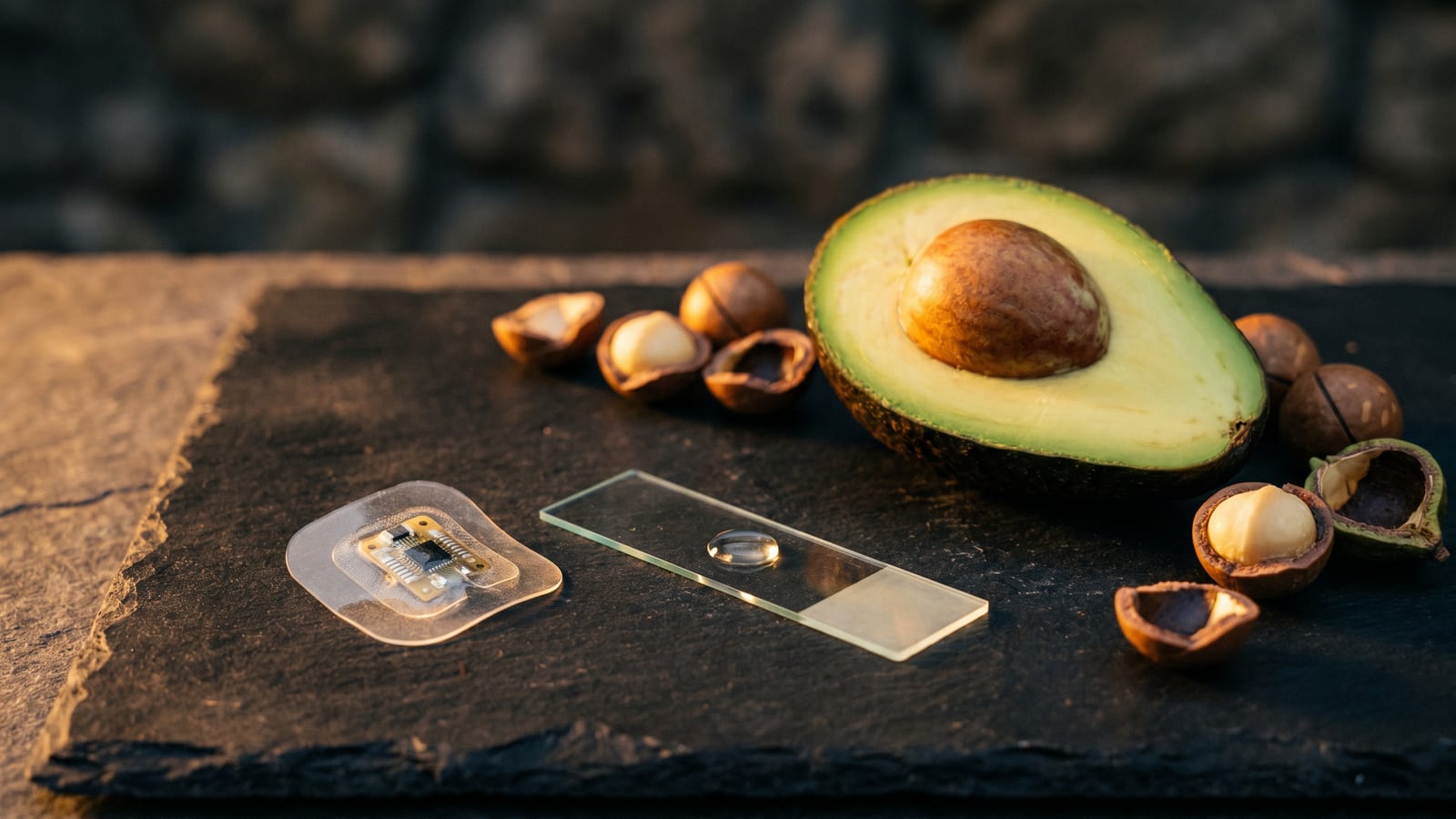
Most people who care about ketones own a finger-stick meter. Poke, wait, read. It works. But it tells you one number at one moment in time. A continuous ketone monitor (CKM) plays a different game entirely. It sits on your body and streams data throughout the day, letting you watch how your ketone levels rise after a fast, crash after a carb-heavy meal, or spike after a hard workout. Whether that level of insight justifies the cost and hassle is what this article is about.
What Is a Continuous Ketone Monitor?
A CKM is a wearable sensor that measures ketone concentration in your interstitial fluid (the fluid between cells, just under your skin) and sends real-time readings to a receiver or smartphone. Unlike a traditional blood ketone meter, which requires a lancet and a fresh strip each time, a CKM stays on your body for days or weeks at a time.
The main appeal for biohackers is pattern recognition. You stop asking “am I in ketosis?” and start asking “how deep is my ketosis right now, and how long can I hold it?” That shift in question changes what you can learn. A single reading tells you your status. A continuous stream tells you how your diet, sleep, stress, and exercise shape your metabolism over days and weeks.
The category is still small. Abbott’s FreeStyle Libre with an optional ketone sensor is the most established option. Other devices exist, but availability is patchy and some are primarily sold through medical channels rather than direct to consumers. Before buying, verify current market availability.
How Continuous Ketone Monitoring Works
CKM sensors use an electrochemical reaction to measure beta-hydroxybutyrate (BHB), the primary ketone body your body produces during nutritional ketosis. The sensor coating contains an enzyme called beta-hydroxybutyrate oxidase. When BHB in your interstitial fluid contacts the sensor, the enzyme produces hydrogen peroxide. The device measures the electrical signal from that reaction and converts it to a BHB concentration reading.
This is the same enzyme-based approach used in finger-stick ketone meters. The difference is that a CKM reads interstitial fluid continuously via a small filament that sits just under your skin, while a finger-stick meter reads capillary blood from a fresh puncture. Interstitial fluid readings lag behind blood readings by about 10–20 minutes, which matters when you’re tracking rapid changes like post-meal dips or post-workout spikes.
Breath ketone monitors work differently. They measure acetone, a volatile ketone body you exhale, and are non-invasive. But breath acetone correlates loosely with blood BHB at best, and the relationship varies between individuals and even within the same person depending on hydration and respiratory rate. Blood-based continuous monitoring is more accurate. Urine ketone strips measure acetoacetate and are semi-quantitative at best. They have no role in continuous monitoring.
The continuous tracking advantage is real: you see the shape of your ketone curve, not just a snapshot. You learn that your morning fasting ketones hover around 0.8 mM on a steady keto diet, that a MCT coffee bumps you to 1.4 mM within 40 minutes, and that a high-carb dinner drops you to 0.2 mM by midnight. That’s information a single finger-stick reading cannot give you.
What the Research Says About Ketone Tracking
The evidence base for ketone monitoring splits into two zones. The first is well-established: tracking ketones during fasting, carbohydrate restriction, or very-low-carb diets confirms nutritional ketosis and helps distinguish it from diabetic ketoacidosis (DKA). This is the clinical foundation of ketone monitoring and where the science is solid.
The second zone is where biohackers operate, and the evidence is thinner. Ketone levels during fat adaptation correlate reasonably well with fat oxidation rates. During a fasted state or with strict carbohydrate restriction, elevated blood BHB does predict increased fatty acid mobilization and oxidation. If your goal is confirming metabolic flexibility and fat adaptation, ketones are a useful data point.
The cognitive performance angle is murkier. Some studies report improved executive function and subjective mental clarity at ketone levels around 1–4 mM. A 2005 study by Ota et al. found that exogenous ketone supplementation improved cognitive performance in a spatial memory task in rodents. Human data in free-living conditions is sparse and confounded by diet, sleep, and individual variation. Don’t buy a CKM expecting objective proof that your brain is sharper on ketones. The evidence is suggestive, not conclusive.
The strongest case for continuous ketone monitoring remains the medical one: people with type 1 diabetes or insulin-dependent type 2 diabetes use CKMs to track ketone trends and catch DKA early. For non-diabetics, the case for continuous monitoring is less urgent but still reasonable if you’re running a strict ketogenic protocol and want data-driven feedback.
Continuous Ketone Monitors - Current Options
Abbott FreeStyle Libre 2 with ketone sensor is the main confirmed consumer option. The Libre 2 platform is well-established as a CGM for diabetics; Abbott offers an optional ketone sensor cartridge. Wear duration is 14 days per sensor. It requires no finger-stick calibration after initial setup. The LibreLink app displays readings on your phone. Cost runs roughly $75–100 per sensor, with the reader separate if you don’t use a compatible phone. Abbott’s overall CGM ecosystem is solid and reliable, though the ketone-specific sensor performance is less studied than the glucose sensor.
Senseonics Eversense is an implantable CGM with a wear duration of up to 180 days, but it is primarily available through clinical programs and specialty clinics. The implantable design means no external filament to snag on things, and long-term cost per day may be lower than multi-sensor approaches. However, it is not widely available for direct consumer purchase and the ketone-sensing version is even more limited in distribution than the glucose version. Skip unless you have a specific clinical relationship enabling access.
Breath ketone monitors (Keyto, breath ketone meters from various brands) offer non-invasive testing but weak accuracy. They measure acetone, which tracks BHB loosely at the population level but poorly at the individual level. If you want continuous data without pricking yourself and can tolerate the accuracy trade-off, breath may be acceptable for trend awareness. For anything requiring precision, it falls short.
| Device | Measurement Type | Wear Duration | Calibration | Approximate Cost |
|---|---|---|---|---|
| Abbott FreeStyle Libre 2 + ketone sensor | Interstitial fluid (blood-equivalent) | 14 days | None after init | ~$75–100/sensor |
| Senseonics Eversense (ketone version) | Interstitial fluid | Up to 180 days | None | Primarily clinical channel |
| Breath ketone monitors | Breath acetone | Continuous use | None | $50–200 device |
The CKM market is small and unstable. Several products marketed as continuous ketone monitors in past years have been discontinued or are available only in limited regions. Verify any device you’re considering against current availability before buying.
How to Use CKM Data for Biohacking
If you decide the data is worth the cost, here’s how to actually use it.
Morning fasting readings are your baseline. After 8–12 hours without food, a reading between 0.5–3.0 mM indicates nutritional ketosis. Below 0.5 mM means you’re not running on ketones at that moment. If you’re strict keto and your morning reading is consistently below 0.5 mM, your total carbohydrate intake or protein timing may be keeping you out of ketosis.
Post-meal ketone dynamics tell you how your body responds to food. A drop after eating is normal, even on a keto diet. Protein raises insulin moderately; dietary fat keeps insulin low. The magnitude and duration of the post-meal dip varies. A high-carbohydrate meal will drop ketones sharply and recovery to baseline may take 12–24 hours depending on your metabolic flexibility.
Exercise creates acute ketone elevation, particularly after high-intensity or prolonged work. During exercise, fatty acid mobilization increases and the liver produces ketones. Post-workout, you often see a ketone spike in the 30–90 minutes after finishing. As you become fat-adapted, this post-workout ketone response becomes more pronounced and more consistent.
Fat adaptation takes time. In the first weeks of a strict ketogenic diet, ketone levels fluctuate widely. After 4–8 weeks of consistent adherence, the pattern stabilizes. Your morning baseline rises, post-meal dips shorten, and post-workout spikes become more reliable. CKM data over weeks is far more informative than daily readings during this period.
A realistic data pattern on a structured keto day: wake at 0.9 mM, drink MCT coffee, rise to 1.3 mM within 45 minutes, eat lunch (moderate protein, high fat) and dip to 0.7 mM, train in the afternoon and rebound to 1.5 mM post-workout, settle at 1.1 mM by evening, stay stable overnight. A high-carb dinner resets the pattern.
Limitations and Who Should Not Bother
The accuracy gap between a CKM sensor and a lab-grade blood test is real. Sensor accuracy is typically within 15–20% of a blood reference, which is acceptable for trend tracking but insufficient for clinical decision-making. If you need precise ketone quantification, a laboratory blood draw is your only reliable option.
Sensor lag is a genuine limitation. Interstitial fluid lags blood by 10–20 minutes. If you’re monitoring rapid metabolic changes, the CKM smooths out spikes and dips relative to a finger-stick reading from capillary blood. For tracking trends over hours and days this is fine. For tracking acute post-meal dynamics, you need to account for the lag.
Cost is not trivial. At $75–100 per 14-day sensor, you’re looking at roughly $200–250 per month in ongoing sensor costs. The reader is a one-time expense. Before committing, ask yourself whether you have a specific question the data will answer, or whether you’re buying into the idea of tracking for its own sake.
Who should skip it: Casual low-carbers who aren’t严格 keto. People without a specific metabolic question to answer. Anyone expecting objective, actionable cognitive or performance improvements that the evidence doesn’t firmly support.
Who it makes sense for: Strict ketogenic dieters who want to fine-tune carb intake and meal timing. Type 1 adjacent individuals monitoring DKA risk. Biohackers running n=1 experiments on fat adaptation, exogenous ketone supplementation, or metabolic flexibility training who want repeated-measure data rather than single snapshots.
DKA warning: Diabetic ketoacidosis is a medical emergency. If you have any pancreatic function impairment, are on SGLT2 inhibitors, or have any reason to think your ketone levels could reach 10–15 mM or higher, do not rely on a CKM alone. Work with a doctor and use clinical-grade monitoring. Nutritional ketosis in a healthy person tops out around 5–7 mM in most cases. DKA territory starts clinically at 10 mM and above with accompanying symptoms.
FAQ
How often do I need to replace the sensor? Abbott FreeStyle Libre 2 sensors last 14 days. Other devices have different wear durations; check the manufacturer specs for your specific device.
Can I use a CKM if I’m not on a strict ketogenic diet? Yes, but the data will mostly show readings below 0.5 mM, which is not particularly informative. CKM data is most useful when you’re maintaining nutritional ketosis and want to track fluctuations within that state.
Is it accurate enough to guide my diet? For trend tracking and pattern recognition, yes. For precise metabolic decisions, no. The sensor-to-sensor variability and interstitial fluid lag mean individual readings carry meaningful uncertainty. Use the trend, not the number.
Does it work with CGM systems? Abbott’s Libre ecosystem is primarily a CGM platform. Some third-party apps can pull both glucose and ketone data from the Libre, allowing you to track both biomarkers simultaneously. This multi-marker approach is genuinely useful if you’re optimizing metabolic health seriously.
What’s a dangerous ketone level? For a person without diabetes and with no pancreatic dysfunction, ketone levels during nutritional ketosis typically stay below 5–7 mM. If you’re asymptomatic, anything under 5 mM is not dangerous. DKA becomes a clinical concern generally above 10 mM with accompanying symptoms (nausea, confusion, fruity breath, rapid breathing). If you have any reason to be at risk for DKA, seek medical care and do not rely on consumer-grade CKM data alone.
How is this different from a breath ketone meter? Breath meters measure acetone, which you exhale. The correlation between breath acetone and blood BHB is inconsistent between individuals and even within the same person. A breath meter is non-invasive and cheap but far less precise than interstitial fluid monitoring.
Can I swim or work out with it? Abbott FreeStyle Libre 2 is water-resistant (IPX7 rating) and safe for swimming and showering. Exercise is fine; the adhesive patch holds reasonably well, though heavy sweating may reduce wear duration. The sensor filament is small and flexible.