Health Digital Twins - What's Real vs. the Marketing Hype
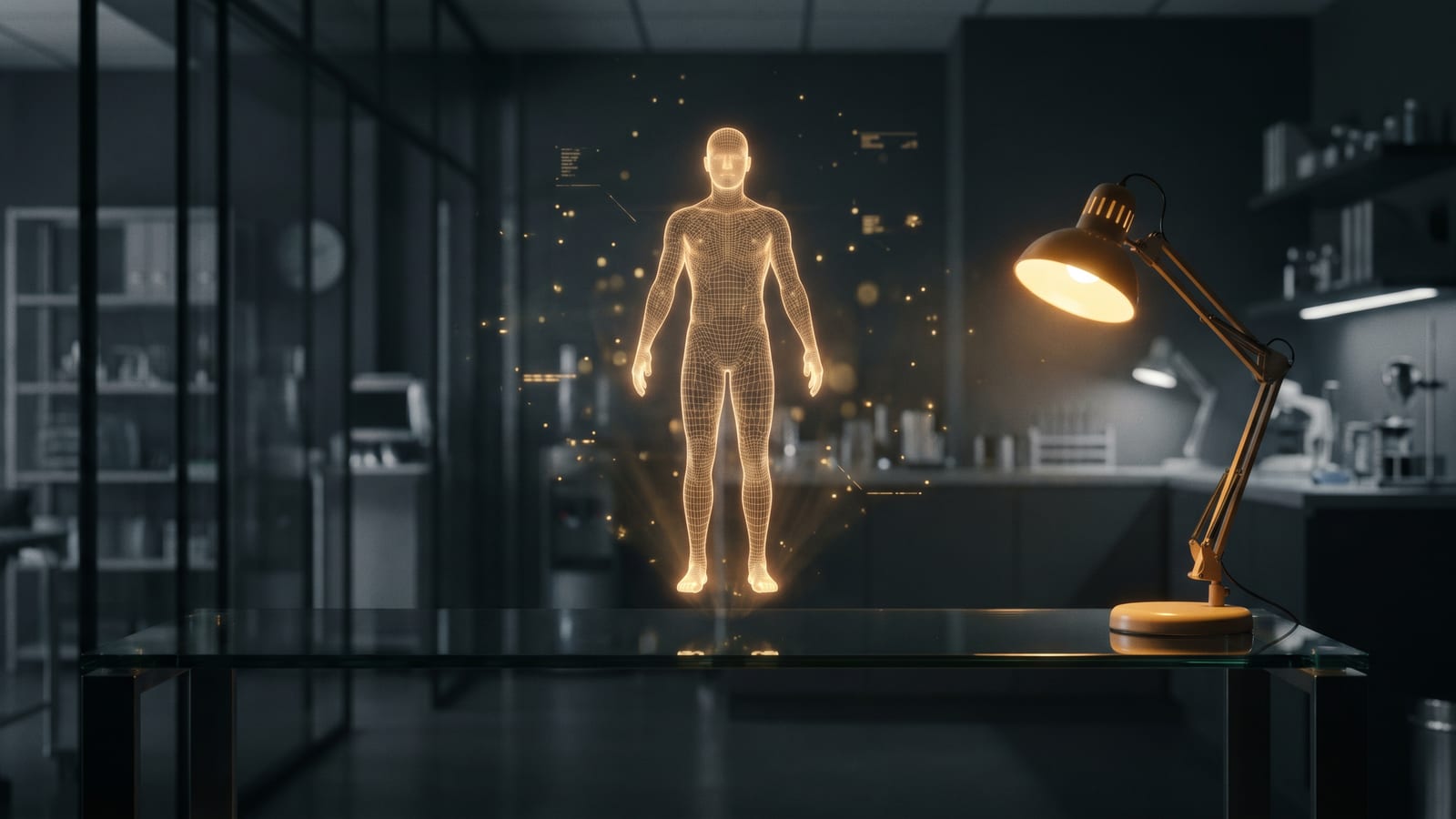
“Digital twin” is showing up on wellness app landing pages, in supplement brand marketing, and anywhere else a buzzword helps sell a subscription. The concept itself is legitimate - NASA built working versions in the 1970s. But the consumer version being sold to you is not the same thing. Here’s what digital twin technology actually does, where it’s genuinely working, and why you don’t have one yet.
What Is a Health Digital Twin?
The concept originated at NASA in the 1970s. Engineers needed a way to monitor spacecraft in real-time without physically touching them, so they built virtual replicas that mirrored every system on the physical craft. Update the twin with sensor data, run simulations, identify failure modes before they happen on the actual hardware. That’s the core idea: a computational model that updates continuously and can test interventions before you commit to them in the real world.
Applied to health, a true digital twin would be a computational model of your physiology. Not just a record of your metrics, but a mechanistic model that understands how your cardiovascular system interacts with your endocrine system, how a specific drug would metabolize through your particular liver enzymes. The model updates with your real data. You want to know how your body would respond to a specific chemotherapy protocol before you receive it? Run it on the twin.
That’s the promise. Three words distinguish it from anything on your phone: predictive, mechanistic, and validated.
Predictive simulation means the model projects future states, not just tracks past ones. The mechanistic piece requires it to be based on biological cause-and-effect, not statistical correlations. And validated means someone tested those predictions against real patient outcomes.
How a Health Digital Twin Works
The modeling loop has four stages. First, data collection: continuous feeds from wearables, periodic lab results, imaging, genomics, and whatever sits in your electronic health record. Second, model construction: computational biologists encode known biological relationships - how insulin signaling works, how cardiac electrical activity propagates, how drug compounds metabolize through liver enzymes. Third, simulation: the model runs interventions against the virtual physiology. Fourth, prediction: outputs project how your biomarkers or disease trajectory would change under specific conditions.
Real digital twins need multi-scale modeling. Molecular interactions, cellular behavior, tissue and organ function, whole-body physiology - all operating simultaneously. Your wearable tracks heart rate at the organ level. A real twin would model the electrical storm inside individual cardiac cells at the same time it models your resting HRV. That is the gap between what wearables do and what twins do.
The mechanistic component is the hard part. Pure statistical models can find correlations in population data, but a twin needs causal biological architecture. That is why building one requires teams of computational biologists, not just data scientists.
Where Digital Twins Are Already Helping People
Real clinical digital twins exist. They are not consumer products and not science fiction.
The most cited consumer example is Twin Health, covered by WIRED in 2024. Their platform combines continuous wearable data with AI modeling to manage diabetes and obesity. Their published outcomes showed 71% of participants reducing medication dependence. That is a real result, not a pilot study. The platform uses CGM data, activity tracking, and sleep metrics to model metabolic responses to food and exercise - then generates personalized recommendations. It is the closest thing to a working personal health twin that exists today, though it is still a narrow application focused on metabolic health, not a full physiological twin.
Cardiac medicine is probably the most mature clinical application. ECG data combined with computational models of cardiac electrical activity can predict arrhythmia risk and simulate the outcome of ablation procedures before a surgeon touches the patient. Siemens Healthineers has built cardiac modeling tools used in clinical settings as decision support.
In drug development, pharma companies and academic researchers build virtual patient populations to simulate how a compound will behave before human trials. PMC-published work from 2025 documents this in oncology, where mechanistic tumor growth models predict treatment response trajectories before chemotherapy begins.
GE HealthCare uses digital twin modeling for hospital patient flow, ICU resource allocation, and capacity planning. Legitimate work with measurable outcomes, though less immediately relevant to personal health optimization.
All of these applications share something: enormous data requirements, domain-specific mechanistic models built by teams of computational biologists, and validation against clinical outcomes. None of them translate to a $29/month subscription app.
Why Your Wearable Is Not a Digital Twin
Consumer health products do none of the things a twin requires. What they do is aggregate your data and apply statistical pattern recognition to it. Your Oura ring identifies that you sleep worse after late-night alcohol. Your Whoop tells you your recovery score is low based on HRV and sleep duration. InsideTracker compares your bloodwork to population reference ranges. SiPhox lets you track biomarkers over time and see trends. Genuinely useful, all of them. None of them is a digital twin in any technical sense.
The Problems and Barriers
Even if the computational biology were solved, personal health digital twins face a stack of problems that are not primarily technical.
Data silos are the first blocker. Your health data is fragmented across systems that do not talk to each other. Your electronic health record might live in three different systems across hospitals and clinics you have visited, and part of it may still be on paper. Your wearable data lives in a vendor app. Your lab results from your last annual physical are in a patient portal you have logged into twice. Your imaging is at the radiology center. Nobody has assembled a unified longitudinal health record for you, and even if they tried, they would find large gaps.
Privacy and health data ownership is a real concern, not hypothetical. A system sophisticated enough to model your physiology is also sophisticated enough to be misused by insurers, employers, or anyone with access to the data. The regulatory frameworks for this are not yet adequate in most jurisdictions.
The validation problem is the hardest. A model complex enough to be useful has thousands of parameters. Testing its predictions against real patient outcomes takes years. The systems biology challenge here is a science problem, not a software engineering problem. Without validation, you have a simulation, not a twin.
Access inequality follows from everything above. The people who could most benefit from precision health modeling - those with chronic conditions, older adults, people without regular healthcare access - are the least likely to have the multi-omic data and continuous monitoring required to build one.
The FDA and EU MDR are still figuring out how to regulate AI-driven health modeling. This creates uncertainty for companies building these systems and limits what can be claimed without triggering regulatory review.
What You Can Build Today: Your Digital Shadow
The useful frame for what is available now is “digital shadow” rather than digital twin. A shadow captures some features without being a full replica. Your health data, assembled thoughtfully, gives you a partial statistical model of your health patterns. Worth having, even if it is not a twin.
CGM is the most powerful single data stream available to consumers right now for building a metabolic shadow. Continuous glucose monitoring tracks how your blood sugar responds to food, sleep, stress, and exercise in real time. Combined with a wearable like Oura or Whoop for HRV and sleep data, and quarterly lab work measuring fasting insulin, HbA1c, and lipid fractions, you have the raw material for a proto-twin dataset that Twin Health’s commercial platform is built on.
Longitudinal biomarker tracking is the most underused tool in consumer biohacking. SiPhox and InsideTracker are genuinely valuable not for any single test, but for the trend data that accumulates over months and years. Testing quarterly and watching how your hs-CRP, testosterone, fasting insulin, and lipid fractions move over time, correlated with what you were doing differently, builds a personalized dataset that population-level research cannot give you.
Wearable data over months reveals individual relationships not visible in the short term: the connection between training load and HRV suppression, the lag between alcohol consumption and REM sleep degradation, the pattern of elevated resting heart rate that precedes illness. Oura, Whoop, and Apple Health each handle this reasonably well. The value compounds with time, which most people don’t stick around long enough to realize.
Your own intervention logs are underrated as a data source. When you change something, record it. Structured self-experimentation, even without formal n=1 trial design, accumulates information about how your biology responds to specific inputs.
Perplexity Health and similar tools combine wearables, family history, and questionnaire data to generate health trajectory estimates. Sophisticated correlation engines, nothing more. Treat their outputs as probability estimates informed by your data, not simulations.
What’s Coming in the Next Five Years
Some genuinely predictive features are already arriving at the edges of consumer devices. Apple Watch’s atrial fibrillation detection from wrist PPG is validated and FDA-cleared. Certain sleep apnea detection algorithms on wearables are approaching clinical utility. These are narrow, well-validated predictions on specific physiological signals, predecessors to broader digital twin functionality.
Over the next five to ten years, expect better integration between wearable and laboratory biomarker data, more sophisticated correlation modeling, and validated predictive features layered onto consumer devices. Some of this will be called “digital twin” whether or not it deserves the label.
True personal health digital twins are at minimum ten years away. The blockers are data infrastructure, privacy regulation, validation methodology, and the fundamental science of systems biology. Solving all four simultaneously is a hard coordination problem. Progress is happening in research labs and clinical settings, not in consumer apps.
Start now with what exists. CGM, quarterly labs, HRV tracking, and structured self-experimentation give you a real dataset that compounds in value as these tools mature. The foundation you build today is the data foundation that future tools will run on.
Frequently Asked Questions
What is a health digital twin?
A computational model of your physiology that updates continuously with real data and simulates how your body would respond to specific interventions before you try them. The key distinction: mechanistic biological modeling at multiple scales, not just tracking metrics against population averages.
Are consumer health apps actually digital twins?
No. Apps like Oura, Whoop, InsideTracker, and SiPhox are data aggregation and statistical tools. They identify correlations, track trends, and make recommendations based on population-level comparisons. They do not contain mechanistic models of your biology and cannot simulate future physiological states. Calling them digital twins is a marketing choice.
What data would I need for a real digital twin?
At minimum: complete whole-genome sequencing, a unified electronic health record spanning your full medical history, continuous biometric data (heart rate, HRV, temperature, activity, sleep), regular bloodwork including proteomic and metabolomic panels, and ideally microbiome data over time. Most people have fragments of one or two of these categories.
Can digital twins predict disease?
In specific clinical contexts, yes. Cardiac digital twins can predict arrhythmia risk. Tumor growth models predict treatment response for certain cancers. Consumer apps that claim to predict your future health are extrapolating from population statistics, useful, but not the same as mechanistic prediction.
Is InsideTracker or SiPhox a digital twin?
No. Both are longitudinal biomarker tracking platforms. InsideTracker compares your bloodwork to population reference ranges and generates personalized recommendations. SiPhox tracks biomarker trends over time. Neither contains a mechanistic model of your physiology or can simulate counterfactual health scenarios.
How close are we to real personal health digital twins?
Best honest estimate: ten or more years before anything resembling a true personal health digital twin reaches general consumers. The computational biology is partially solved. Data infrastructure, privacy frameworks, validation methodology, and whole-body systems modeling all need to mature simultaneously. Progress is real, but slow.
What is an in silico twin?
An in silico twin (IST) is a research-level approach combining mechanistic biological modeling with AI pattern recognition to mirror an individual’s health trajectory. Mechanistic components capture known biology; AI components handle the complexity and noise that pure equation-based models cannot manage. It is not available as a consumer product.
Should I wait for digital twin technology or use what exists now?
Use what exists now. Longitudinal biomarker tracking and wearable data correlation are genuinely valuable, even if they are not digital twins. The data you build today compounds as tools improve. Waiting before investing in your health data means arriving at a more sophisticated system with nothing to feed it.
Will digital twins replace my doctor?
No. Clinical judgment requires context, relationship, and the ability to respond to the unexpected, none of which a model replicates. At best, digital twins give your physician better decision support for specific scenarios. They do not diagnose, they do not empathize, and they do not adapt when something unusual happens.