Biohacking Devices - What to Buy, What to Skip, and How to Use Them
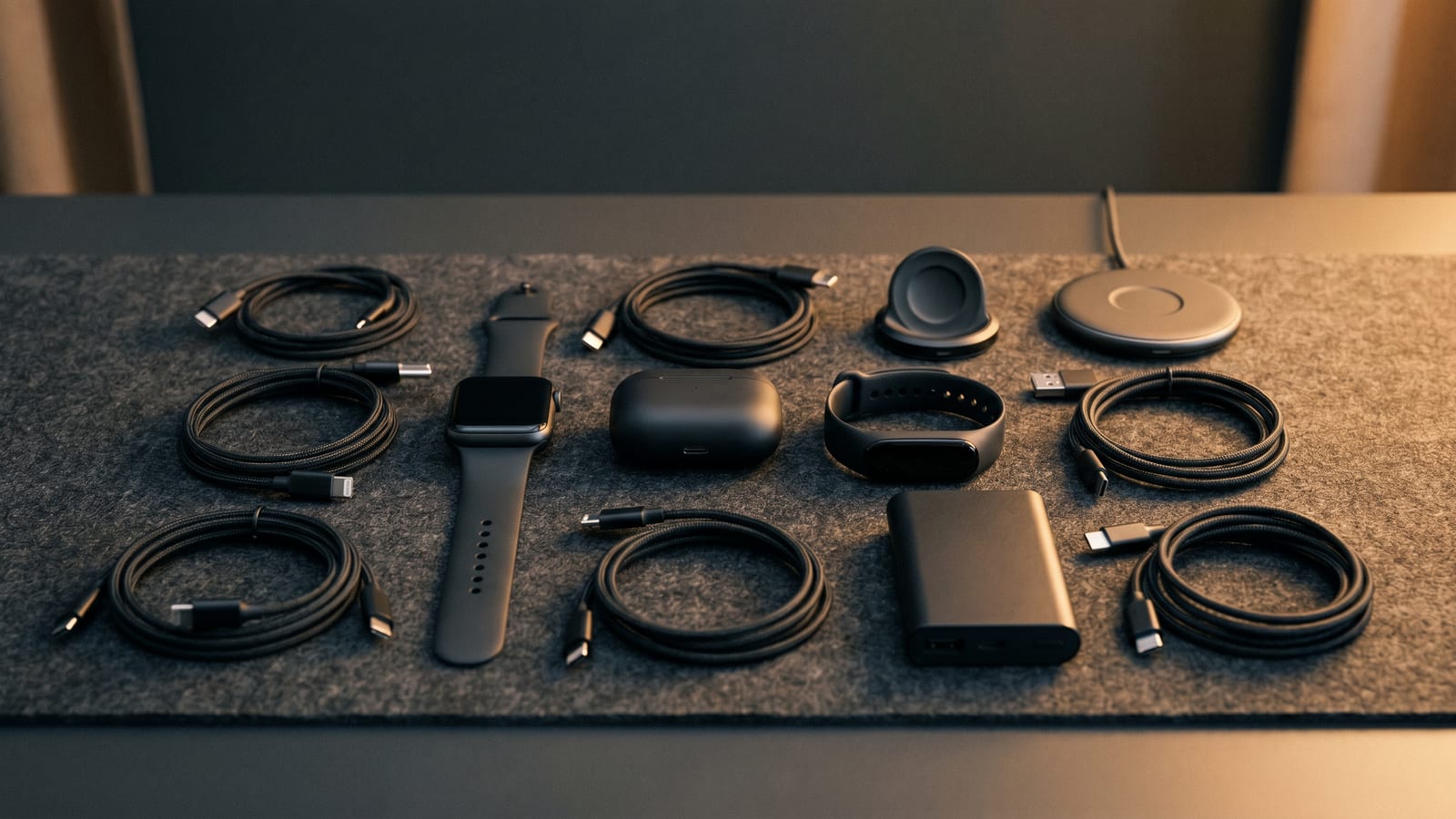
Biohacking devices flood the market, and most buyers end up with a drawer full of hardware they stopped using after three weeks. This guide prevents that: clear explanations of what each device category actually does, honest takes on the evidence, and a framework for building a stack that earns its place.
If you’re already wearing an Oura Ring and running a red light panel, skip to the stack-building and skip-list sections.
What Are Biohacking Devices?
Biohacking devices are hardware tools designed to measure, monitor, or modify biological processes outside of a clinical setting. They range from wearable sensors that track your physiology continuously to active intervention devices that attempt to change how your body or brain functions.
The distinction from standard fitness trackers matters. A basic fitness tracker tells you how many steps you took. A biohacking-oriented device gives you data on sleep architecture (the breakdown of time spent in light, deep, and REM sleep stages), heart rate variability (HRV, the millisecond variation between heartbeats, which reflects autonomic nervous system recovery), skin temperature trends, and respiratory rate. The goal is not just activity logging. It’s closing a feedback loop: measure baseline, apply a targeted intervention, measure again, and see what changed.
That closed loop is the point. Biohacking without measurement is just guessing, and measurement without interpretation is noise. Raw data, even excellent data from an expensive device, means nothing if you don’t know what you’re looking for, what changes are meaningful, and what levers you have to pull. Keep that in mind throughout this guide. The device is never the answer by itself.
Wearables: Rings, Watches, and Patches
This is where most people start, and reasonably so. Wearables offer continuous, passive data collection. You wear them, they measure things, you look at trends over time.
Oura Ring
The Oura Ring is the most popular biohacking wearable for good reason. It sits on your finger, out of the way, and focuses on sleep and recovery rather than trying to be a smartwatch. Key metrics: sleep architecture, HRV, resting heart rate, skin temperature deviation from your personal baseline, and a Readiness Score synthesizing these into a daily number.
Its strengths are real. The finger form factor means better overnight signal than a watch. The temperature sensor detects early illness and menstrual cycle phases before you feel them. The Readiness Score, despite being a black box, is genuinely useful as a daily check-in.
Weaknesses: the Readiness Score is proprietary, the app requires a subscription for full features, and activity tracking is mediocre. If your primary goal is training load optimization, Oura is the wrong tool. For sleep and recovery monitoring, it’s among the best consumer options.
Whoop
Whoop is built for athletes and people who train hard, emphasizing strain (cardiovascular load accumulated across the day) and recovery calculated from HRV and sleep. It also tracks respiratory rate during sleep, adding a meaningful signal Oura doesn’t prioritize.
The honest critique: Whoop has no screen, no step tracking, and the subscription model locks you into ongoing payment. For someone seriously periodizing training and tracking recovery across a season, the cost is defensible. For casual users, it’s expensive relative to what they’ll use.
Apple Watch and Garmin
Apple Watch has ECG capability, blood oxygen sensing, and sleep tracking with strong iOS integration. Garmin’s multi-sport watches track HRV, body battery, and training readiness with surprising depth for serious endurance athletes. Neither is optimized for biohacking specifically. Both prioritize being good general-purpose wearables over being excellent recovery and sleep measurement tools.
Abbott FreeStyle Libre (CGM)
The FreeStyle Libre is a continuous glucose monitor (CGM), a small sensor worn on the back of the upper arm that measures interstitial glucose every few minutes for up to 14 days. It was designed for diabetic patients but has become a significant tool in metabolic biohacking.
Non-diabetic use is growing because glucose variability, post-meal glucose spikes, and fasting glucose trends reveal a lot about metabolic health that no other wearable captures. More on CGMs in the blood testing section.
Which wearable for which goal
- Sleep and recovery focus: Oura Ring
- Athletic performance and training load: Whoop or Garmin
- Metabolic health: FreeStyle Libre CGM
- Already in the Apple ecosystem: Apple Watch
Brain Stimulation Devices
This is the category where hype runs furthest ahead of evidence. Be skeptical.
Halo Neuroscience (Halo Sport)
Halo Sport uses transcranial direct current stimulation (tDCS), weak electrical current applied to the scalp to influence neuronal excitability in the motor cortex. The theory is that stimulating the motor cortex during physical skill training amplifies motor learning, potentially accelerating skill acquisition and strength development.
The evidence is real but modest. Some peer-reviewed studies show improved motor learning outcomes in controlled settings. The effect sizes are not enormous, and reproducibility is inconsistent. For elite athletes trying to squeeze out marginal gains in technical skills, it’s worth exploring. For the average person? The signal-to-noise is low.
Thync
Thync marketed itself as a device that modulates the autonomic nervous system via the vagus nerve using low-level electrical stimulation, targeting mood and stress states. The evidence base it was built on is thin, and the company has effectively pivoted away from its original consumer device product. Worth knowing about historically, not worth buying.
Neurofeedback and rTMS home devices
Neurofeedback trains you to consciously influence your brainwave patterns using real-time EEG (electroencephalogram, measuring electrical brain activity) feedback. Clinical neurofeedback has a legitimate evidence base for certain conditions. Consumer home devices that claim to deliver meaningful neurofeedback on a consumer budget are a different story. The hardware limitations are significant.
Repetitive transcranial magnetic stimulation (rTMS) is a clinically validated therapy for depression. Home rTMS devices exist but are not comparable to clinical equipment. Don’t conflate them.
Honest take on the category: brain stimulation devices collectively have the weakest evidence of any category here. A few have real science behind them under specific conditions. Most are selling a mechanism that sounds compelling without the outcomes data to back the claims. Prioritize other categories first.
Sleep Optimization Devices
Not wearables that track sleep, but active devices that change your sleep environment.
ChiliPAD and Ooler
These are mattress pad systems that circulate water at a set temperature under your sleeping surface, allowing you to precisely control bed temperature throughout the night. The mechanism has genuine backing: lowering core body temperature is one of the clearest signals for sleep onset, and maintaining a cooler environment through the night supports deep sleep stages.
This is one of the more defensible device investments for sleep. The evidence for sleep quality benefits from thermal regulation is solid, even if the specific product studies are mostly company-funded. If you sleep hot or live somewhere warm, the effect can be meaningful.
Muse Meditation Headset
Muse is an EEG headband that gives you real-time audio feedback during meditation. When your brain activity indicates calm, you hear ambient nature sounds; when it detects activity spikes, the soundscape changes. It’s designed to teach meditation by making mental state concrete and trackable. The evidence for EEG-guided meditation improving outcomes faster than unguided practice is preliminary. As an engagement tool for people who struggle with consistency, it has genuine value.
A note on category scope: sleep trackers (Oura, Whoop, Garmin) are covered under wearables. This section focuses on devices that actively intervene in sleep quality, not ones that measure it.
Blood Testing and Lab Devices
Wearables measure proxies. Blood tests measure the actual thing.
At-home blood test kits
Services like Everlywell, Thorne, and InsideTracker offer at-home blood draws (or finger prick tests) with results delivered through an app. They measure panels including biomarkers like testosterone, cortisol, thyroid hormones, inflammatory markers, and metabolic indicators.
The honest comparison to a full lab panel: these services are more convenient and often come with interpretation tools, but they typically measure fewer markers than a complete lab workup ordered by a physician. For ongoing self-monitoring of a targeted set of biomarkers, they’re valuable. For a thorough initial baseline, a full lab panel, if you can access one, is still more complete.
CGM for non-diabetics
Wearing a CGM for two to four weeks reveals how different foods, stress, and sleep affect your glucose, and what your personal glycemic response looks like. FreeStyle Libre and Dexcom G6/G7 are the two main platforms used by non-diabetics. For people with no metabolic dysfunction, the data is often reassuring. For others, it reveals patterns they had no idea existed.
Lactate and ketone monitors
Lactate monitors (like the Lactate Plus) identify lactate threshold during training, useful for athletes precision-targeting training zones beyond what heart rate alone can tell. Ketone blood monitors (Keto-Mojo is popular) measure beta-hydroxybutyrate (BHB), useful if you’re experimenting with ketogenic nutrition or extended fasting. Largely irrelevant if you’re not.
The case for lab work over wearables
For many optimization goals, a $200 blood panel tells you more than a $400 wearable. HRV trends are useful. Knowing your actual testosterone, ferritin, vitamin D, and fasting insulin is different. It tells you what’s off, not just that something might be off.
Recovery and Physical Performance Devices
Theragun and Hyperice
Percussive therapy devices like the Theragun use high-frequency vibration to target muscle tissue. The evidence for reducing delayed onset muscle soreness (DOMS) is moderate. The evidence for meaningfully improving performance or accelerating recovery beyond what massage achieves is weaker.
They’re genuinely useful for managing soreness and improving subjective muscle readiness before training. They’re not recovery magic. If you train frequently and have persistent soreness issues, one is worth having. If you train three times a week with adequate sleep and protein, it’s a nice-to-have.
Blood Flow Restriction (BFR) bands
BFR training uses cuffs or wraps to partially restrict venous blood flow from a limb during low-load resistance training, creating a hypertrophic stimulus with much lighter weights than standard training requires. The evidence base here is actually quite solid. Multiple well-designed studies support muscle growth outcomes comparable to high-load training, with less joint stress.
Use cases: injury rehabilitation, training around joint pain, travel or limited equipment situations. Not a replacement for conventional lifting if you’re healthy. A legitimate tool in specific circumstances.
Red light therapy panels
Red and near-infrared light therapy works by stimulating mitochondrial function through photobiomodulation. Research on localized tissue recovery, inflammation reduction, and skin applications is reasonable. Whole-body systemic benefits from consumer panels are extrapolated from weaker evidence. Best supported: localized muscle recovery, joint pain, skin health. Least supported: systemic claims about circadian rhythm, testosterone, and cognition from brief daily sessions.
How to Build a Biohacking Device Stack
The biggest mistake in building a biohacking device stack is starting with intervention devices before you know what you’re intervening on.
Start with one measurement tool. Get baseline data for at least four to six weeks before you add anything else. You need to understand your patterns before you can improve them.
A sensible sequence:
- Wearable for sleep and HRV: Oura or Whoop. Run it for six weeks without changing anything else. Learn your patterns. What does your HRV look like after poor sleep? After alcohol? Before illness?
- Lab work: Get a baseline blood panel. Know where your actual biomarkers stand. This tells you where targeted effort is needed.
- Targeted device: Based on what the data shows, add one intervention device. If sleep is your weak point, thermal regulation. If metabolic health is unclear, a CGM trial. If training recovery is limiting performance, BFR or percussive therapy.
Oura plus a CGM trial is a strong accessible starting combination for most people. Together they cover sleep, recovery, and metabolic response, the three highest-impact variables for most optimization goals.
Two rules to prevent buyer’s remorse: don’t buy a device for data you won’t act on, and re-evaluate your stack every three to six months. Devices that were useful during a period of active experimentation become noise over time. Retire them when they stop producing actionable information.
Skip These: Where Devices Are Overhyped
EMF mitigation gadgets. Devices claiming to protect you from EMFs from phones, WiFi, or electronics have no meaningful evidence base. The mechanism doesn’t hold up.
Single-device health claims. Any device marketed as solving energy, cognition, or longevity with one purchase should be treated with high skepticism. Biology doesn’t work that way. Useful devices work on specific, measurable variables with modest effect sizes.
Expensive devices when the basics aren’t dialed in. A $700 red light panel won’t compensate for sleeping six hours a night, being sedentary, and eating poorly. Devices optimize margins. The foundation has to be there first.
Trendy gadgets with n=1 testimonials only. If a device’s evidence base is founder interviews and influencer reviews, that’s marketing, not evidence. Wait for peer-reviewed data before spending.
Frequently Asked Questions
What’s the best biohacking device for beginners?
An Oura Ring or similar sleep and HRV tracker. It’s passive, gives you immediately actionable data on sleep and recovery, and costs less than most other biohacking hardware. If you’re choosing between Oura and Whoop: Oura is better for sleep and general recovery monitoring, Whoop is better for athletes managing training load and tracking strain.
Do I need a wearable if I get regular blood work?
They measure different things. Blood work gives you a snapshot of specific biomarkers. A wearable gives you continuous trends on sleep quality, recovery, and daily variability. If you can only do one, blood work gives you more actionable information per dollar for most optimization goals.
How many devices should I use at once?
One measurement device at a time, ideally. Running multiple simultaneous interventions makes it impossible to attribute changes to a specific cause. Add one device, observe for four to eight weeks, then add the next. Patience here gets you better results than stacking everything at once.
Can I biohack without any devices?
Yes. Sleep optimization, nutrition, resistance training, sun exposure, cold exposure, and stress management are all evidence-backed interventions that cost nothing or close to it. Devices add measurement and precision. They’re not prerequisites.
Are expensive devices worth it?
For most people, no. At least not initially. A $700 red light panel does not compensate for sleeping five hours a night, sitting all day, and eating a poor diet. Devices optimize the margins of an already-functional baseline. The sequence matters: get sleep, nutrition, and movement solid first, then spend on targeted devices when you have specific data showing where to intervene.
What’s the difference between Oura and Whoop for biohacking?
Oura is better for sleep and general recovery monitoring. Whoop is better for athletes managing training load and tracking cardiovascular strain. Oura has a finger-based form factor with better overnight signal. Whoop has no screen and no step counting, but its strain and recovery algorithms are more sophisticated for periodized training. If you train casually, Oura is the more versatile choice.