Supplement Stacks: A Framework for Combining Them Right
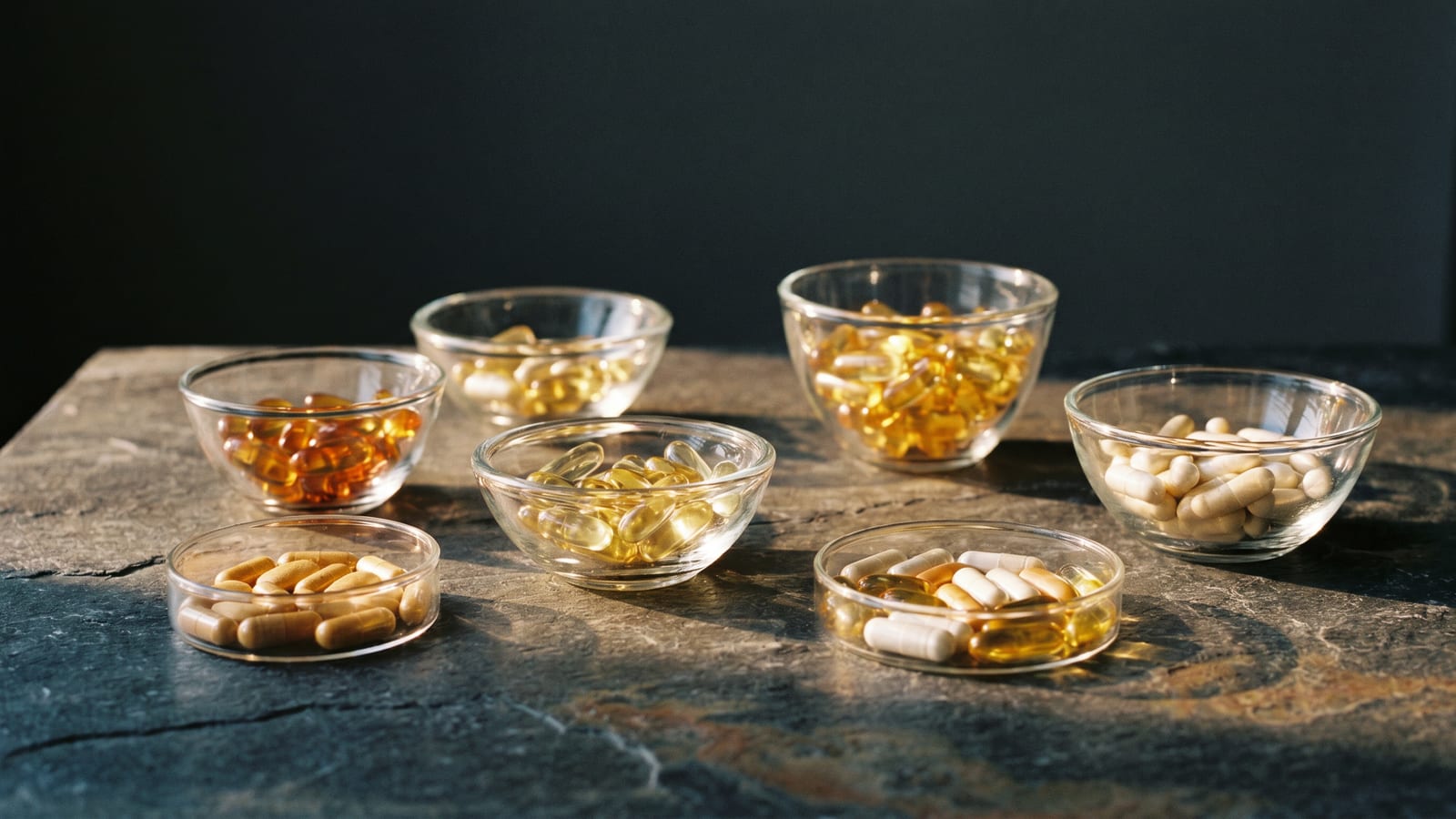
Most supplement stacks are overcomplicated and underthought. Two supplements that both raise dopamine is not a stack. It is a side effect generator with extra branding. The supplement industry loves the word “stack” because it sells more products. Your biology doesn’t care what the label says.
This guide is about building stacks that have a reason to exist. You will get a framework for evaluating synergy, a clear breakdown of what the popular stacks actually do (and why), and a set of questions to ask before adding anything new. No product pitches. No “must-have” megalists.
What Is a Supplement Stack and Why Build One
A supplement stack is any intentional combination of two or more supplements taken together because the combination offers something a single supplement doesn’t. The key word is intentional. Two supplements taken at the same time because you grabbed them both off the shelf is not a stack. It is just taking two supplements.
The genuine appeal of stacking is real, though. Some goals involve multiple biological pathways, and no single compound addresses all of them. Some supplements work better when another compound is present, either because one provides a precursor the other converts, or because one removes a bottleneck the other is limited by. Covering genuine gaps across related mechanisms is a legitimate reason to stack.
When does a stack actually make sense? When you can answer yes to at least one of these:
- The two supplements work through distinct but complementary mechanisms
- One supplement meaningfully improves the bioavailability or function of the other
- Your goal requires addressing two separate physiological processes simultaneously
When does a single, well-chosen supplement win? Almost always when you’re starting out. Find the one supplement best supported for your specific goal. Take it alone for four to six weeks. Only then consider whether adding a second compound gives you something the first doesn’t.
The single-supplement approach tells you what works. The stack approach obscures it.
The Core Principle: Synergy, Not Just Combination
Synergy means the combined effect is greater than the sum of parts. It has a specific mechanism. It is not “these are both good for focus so they probably go well together.”
Here is the framework for evaluating whether two supplements are genuinely synergistic:
Complementary mechanisms are the gold standard. One supplement upregulates a pathway; the other provides the substrate that pathway needs. Or one supplements removes an inhibitor while the other acts on the now-unblocked target. The combination does something neither could do alone at the same doses.
Additive effects are fine but less interesting. Both supplements do the same thing, and you get more of it. This is acceptable when the effect is well-tolerated and dose-limited (you can’t get enough from one without side effects). But be honest: two supplements doing the same job also means two supplements generating overlapping side effects. If each causes mild GI distress independently, taking both may mean significant GI distress.
Absorption timing interactions are where most stack guides go quiet. Calcium blocks iron absorption when taken simultaneously. High-dose zinc taken with copper-containing supplements can displace copper over time. Some fat-soluble vitamins compete for absorption when taken in excess at the same time. The fix is usually spacing: take them at different times of day rather than eliminating one. But you have to know the interaction exists first.
The stacking logic test is simple: explain in one sentence why these two supplements work better together than either alone. If you can’t do it, you don’t have a stack. You have a shopping cart.
The High-Risk Interactions Most Stack Guides Skip
This section exists because most supplement stacking guides omit it entirely. That is a problem. Supplement-drug and supplement-supplement interactions are real, and some of them are dangerous.
Drug-supplement interactions to know:
- SSRIs and St. John’s Wort: St. John’s Wort increases serotonergic activity. Combined with an SSRI (which already elevates serotonin), this raises the risk of serotonin syndrome, a potentially serious condition with symptoms ranging from restlessness and rapid heart rate to seizures.
- Blood thinners (warfarin) and omega-3s: High-dose omega-3 fatty acids have mild anticoagulant effects. In combination with warfarin or other blood thinners, they can shift INR (clotting time) in unpredictable ways. At supplemental doses, the risk is low for most people, but it is not zero, and it is elevated for anyone on anticoagulation therapy.
- Quinolone antibiotics and zinc or magnesium: Zinc and magnesium bind to quinolone antibiotics (ciprofloxacin, levofloxacin) in the gut and dramatically reduce antibiotic absorption. If you are on a course of quinolones, separate mineral supplements by at least two hours, or skip them during the course.
Supplement-supplement interactions to know:
- Calcium and iron: Take them together and you absorb significantly less iron. If you are iron-deficient and also supplementing calcium, timing matters. Take them at least two hours apart.
- High-dose zinc and copper: Zinc and copper compete for the same transport proteins in the gut. Long-term supplementation of zinc without copper can deplete copper stores, leading to deficiency symptoms including fatigue and neurological issues. If your stack includes more than 15-20mg of zinc daily, include a small copper supplement (1-2mg) or watch for symptoms.
- High-dose niacin and methyl donors: This is a less well-known one. Niacin (vitamin B3) at therapeutic doses (500mg or more) increases the demand for methyl groups in the liver as part of its metabolism. This can deplete SAM-e and other methyl donors. Relevant for anyone taking high-dose niacin alongside methylation-sensitive compounds or who has MTHFR variants.
Who is at highest risk: older adults (more likely on multiple prescriptions, slower metabolism), people on any prescription medications, and anyone with liver or kidney impairment (altered metabolism and clearance of both drugs and supplements).
The blanket rule: if you are on any prescription medication, run your complete supplement list by a pharmacist before starting. Not just the new one. The whole list. Pharmacists are specifically trained for interaction checks, and this service is free.
Popular Evidence-Based Stacks and What They Actually Do
These are stacks with genuine mechanistic rationale and a meaningful research base behind them.
Caffeine plus L-Theanine
Caffeine works by blocking adenosine receptors. Adenosine is a compound that accumulates in the brain during waking hours and produces the sensation of fatigue. When caffeine blocks its receptors, the fatigue signal doesn’t land, and dopamine and norepinephrine activity increases. The result is increased alertness and, at higher doses, anxiety and jitteriness.
L-theanine is an amino acid found in tea leaves. It increases GABA activity and alpha brain wave production, which corresponds to a state of relaxed alertness. It does not block caffeine’s mechanism. What it does is blunt the anxiogenic (anxiety-producing) side of caffeine’s effect without reducing the stimulant benefit.
This is genuine synergy. The theanine is not doing the same thing as caffeine. It is modifying one specific unwanted effect. Standard dosing used in research: 100-200mg of each, in a 1:1 or 2:1 theanine-to-caffeine ratio. Works well for people who want the focus benefit of caffeine without the edge.
Creatine Monohydrate plus Beta-Alanine
Creatine increases the availability of phosphocreatine in muscle tissue, which regenerates ATP (the primary energy currency for short, high-intensity efforts) faster. The result is more reps before fatigue, better recovery between sets, and over time, greater training volume.
Beta-alanine is a precursor to carnosine, which acts as an intramuscular pH buffer. During high-intensity exercise, lactic acid accumulation drops muscle pH, contributing to the burning sensation and fatigue you feel near failure. More carnosine means better buffering, which extends time to fatigue during efforts lasting roughly 60-240 seconds.
These mechanisms don’t overlap. Creatine helps with peak power and recovery between efforts. Beta-alanine helps with sustained high-intensity efforts. For an athlete doing mixed training, the combination addresses two genuinely different limiters. Note: beta-alanine causes a harmless tingling sensation (paresthesia) in most people. This is normal and not a sign of anything wrong.
Omega-3 plus Vitamin D plus K2
All three are fat-soluble, which means they are absorbed together when taken with a meal containing dietary fat. Taking them at the same meal makes practical sense.
Beyond convenience, there is a functional rationale. Vitamin D upregulates calcium absorption from the gut. Vitamin K2 (specifically MK-7 form) activates osteocalcin and matrix Gla protein, which direct that calcium into bone and keep it out of arterial walls. This combination is specifically relevant for bone mineral density and cardiovascular health. Omega-3 fatty acids (EPA and DHA) support systemic inflammation regulation and cardiovascular function. The three together cover related but non-overlapping aspects of the same underlying goal.
Magnesium plus Vitamin B6
Magnesium is involved in over 300 enzymatic reactions and is commonly depleted by stress, poor sleep, and high-carbohydrate diets. Deficiency is widespread. B6 (pyridoxine) improves magnesium absorption in the gut and its retention in cells. The combination has been studied specifically in the context of stress and sleep quality, with better results than magnesium alone in some trials.
This is a low-risk, practical stack for most people. Standard doses: 300-400mg elemental magnesium (glycinate or malate form for better tolerance) with 10-25mg B6.
Curcumin plus Black Pepper (Piperine)
Curcumin is the primary bioactive compound in turmeric. It has well-documented anti-inflammatory properties in vitro and in animal models. The problem: standard curcumin is extremely poorly absorbed. Taken alone, most of it passes through the gut without entering circulation.
Piperine, the active compound in black pepper, inhibits intestinal enzymes and transporters that would otherwise metabolize curcumin before it can be absorbed. The combination increases curcumin bioavailability by approximately 2000%. Without piperine (or a phospholipid complex like Meriva), most curcumin supplements are close to useless. This is the clearest example of a bioavailability-driven stacking rationale.
Building Your Own Stack: A Deliberate Process
Step 1: Get specific about the goal. “Better health” is not a goal. “Reduce delayed onset muscle soreness after training sessions” is a goal. “Improve sleep onset without next-day grogginess” is a goal. The more specific you are, the more accurately you can evaluate whether a supplement is actually working.
Step 2: Find the best single supplement for that goal. Look for clinical evidence, not testimonials. Examine.com is a good starting point for evidence summaries. Find the compound with the best research support for your specific outcome and start there.
Step 3: Run it alone for 2-3 weeks minimum. This is how you establish a baseline response. If you add three supplements at once and something improves (or gets worse), you have no idea which compound was responsible.
Step 4: Audit your existing regimen for overlap. Before adding anything, check what you’re already taking. Pre-workout formulas often contain magnesium, zinc, and multiple B vitamins at doses that matter. Multivitamins can take you past tolerable upper limits for fat-soluble vitamins if you add individual supplements on top. List every compound and dose in your current regimen before adding to it.
Step 5: Check interaction risk before adding anything new. Use a tool like Drugs.com’s interaction checker, which covers supplement-drug interactions, not just drug-drug. If you are on prescriptions, this step is mandatory.
Evaluation window: Most supplements require a minimum of four weeks of consistent use before meaningful evaluation. Some (particularly anything affecting body composition, bone density, or mood regulation) require three months or more. If you are cycling in and out before six weeks, you are not giving the supplement a fair assessment.
When to Skip the Stack Entirely
More supplements means more interactions, more variables, and more uncertainty about what is doing what. This is supplement polypharmacy, and it is a real risk.
If a single supplement addresses your goal, stop there. There is no prize for complexity. A well-dosed creatine monohydrate protocol that you run consistently will outperform any overcomplicated athletic stack that you take inconsistently.
Some stacking is actively contraindicated. Stimulant-containing supplements (pre-workouts with high-dose caffeine, synephrine, or yohimbine) combined with cardiovascular medications can cause dangerous interactions. Berberine and metformin both lower blood glucose through overlapping mechanisms; combining them increases hypoglycemia risk. Chromium, alpha-lipoic acid, and cinnamon all affect blood sugar; taking three at once without medical oversight is not prudent for a diabetic on medication.
The simple test: would you take each supplement in this stack on its own? If the answer to any of them is “no, but it’s fine because the other stuff balances it out,” that is a red flag. Every supplement in your stack should have a standalone reason to be there.
Quality Control: Sourcing Supplements That Don’t Defeat the Purpose
Supplements are not pharmaceutical drugs. They are not required to prove efficacy or even consistent composition before being sold. The variance between brands for the same compound can be enormous. A supplement that is underdosed, contaminated, or mislabeled defeats the entire purpose of the stack you built around it.
Third-party testing is the minimum bar. Look for supplements certified by:
- NSF International (NSF Certified for Sport is the gold standard for athletes)
- Informed Sport (specifically screens for banned substances)
- USP (United States Pharmacopeia, verifies label accuracy and manufacturing standards)
These certifications mean an independent lab has verified that what is on the label is in the bottle, at the stated dose, without prohibited contaminants. Not every supplement needs sport certification unless you are a tested athlete, but any of the three bodies above is a meaningful quality signal.
Avoid proprietary blends. A proprietary blend lists the combined weight of multiple ingredients without disclosing individual doses. This is legally permissible and practically useless. You cannot evaluate whether a compound is dosed at a meaningful level. Companies use proprietary blends to hide underdosing. There is no legitimate reason to buy one.
The price floor problem. Magnesium glycinate from a certified manufacturer costs more than magnesium oxide from an uncertified one. The glycinate form has meaningfully better bioavailability and GI tolerance. The oxide form is cheap because it is an inferior source. For supplements you are taking deliberately and consistently, buying the cheapest available option is usually false economy. You are paying for a box of pills that may or may not work as labeled.
Frequently Asked Questions
Can I take a supplement stack every day?
It depends on what is in the stack. Most foundational supplements (magnesium, vitamin D, omega-3, creatine) are designed for daily use and work best with consistent dosing. Stimulant-containing supplements (anything with caffeine or similar compounds) are better cycled, taking at least one day off per week and longer breaks periodically to prevent tolerance. The standard advice on the packaging is a reasonable starting point; the mechanistic reasoning for cycling is about preventing receptor downregulation or tolerance, not arbitrary caution.
What’s the best supplement stack for energy?
The caffeine plus L-theanine combination has the most evidence and the clearest mechanism. For sustained energy rather than acute stimulation, addressing deficiencies first often works better than adding stimulants: low magnesium, low iron (especially in menstruating women), and low vitamin D are common and commonly missed causes of fatigue. Fix the deficiency before adding a stimulant layer on top.
Are supplement stacks safe for beginners?
Start with one supplement, not a stack. Learn how your body responds to individual compounds before combining them. The most beginner-appropriate supplements with good safety profiles are creatine monohydrate, magnesium glycinate, vitamin D3 (with K2), and omega-3s. These are also among the most commonly deficient. A beginner who takes nothing but well-dosed vitamin D and magnesium and addresses genuine deficiencies will likely get more benefit than someone running a ten-compound nootropic stack.
Can supplements replace a healthy diet?
No. Supplements supplement a diet; they do not replace it. The research on isolated compounds rarely replicates the effects of whole food sources, and the full matrix of nutrients, fiber, and phytochemicals in food does things that no supplement stack replicates. Supplements address specific gaps, deficiencies, or performance goals. They are not a workaround for poor dietary habits.
How do I know if a supplement stack is working?
You need a measurable outcome and a baseline before you start. “I feel better” is not measurable. Sleep onset time, time to exhaustion on a standardized exercise test, HRV, or a validated mood or anxiety questionnaire are measurable. Track before you start, track consistently while on the stack, and run it for at least four weeks before drawing conclusions. If you cannot articulate what you are measuring, you will not be able to evaluate whether it is working.
Should I cycle my supplement stack?
Some supplements benefit from cycling, and some don’t. Stimulants (caffeine) and adaptogens (ashwagandha) are commonly cycled because continued use can lead to tolerance or receptor adaptation. Foundational supplements (creatine, vitamin D, omega-3, magnesium) are generally not cycled because their mechanism is not tolerance-prone and discontinuation removes the benefit. Fat-soluble vitamins at high doses may require periodic breaks to prevent accumulation. When in doubt, check the specific mechanism: if it involves receptor binding or enzyme induction that can desensitize, cycling makes sense. If it is providing a substrate or correcting a deficiency, continuous use is appropriate.