Polyphenols and Longevity - The Evidence-Based Guide
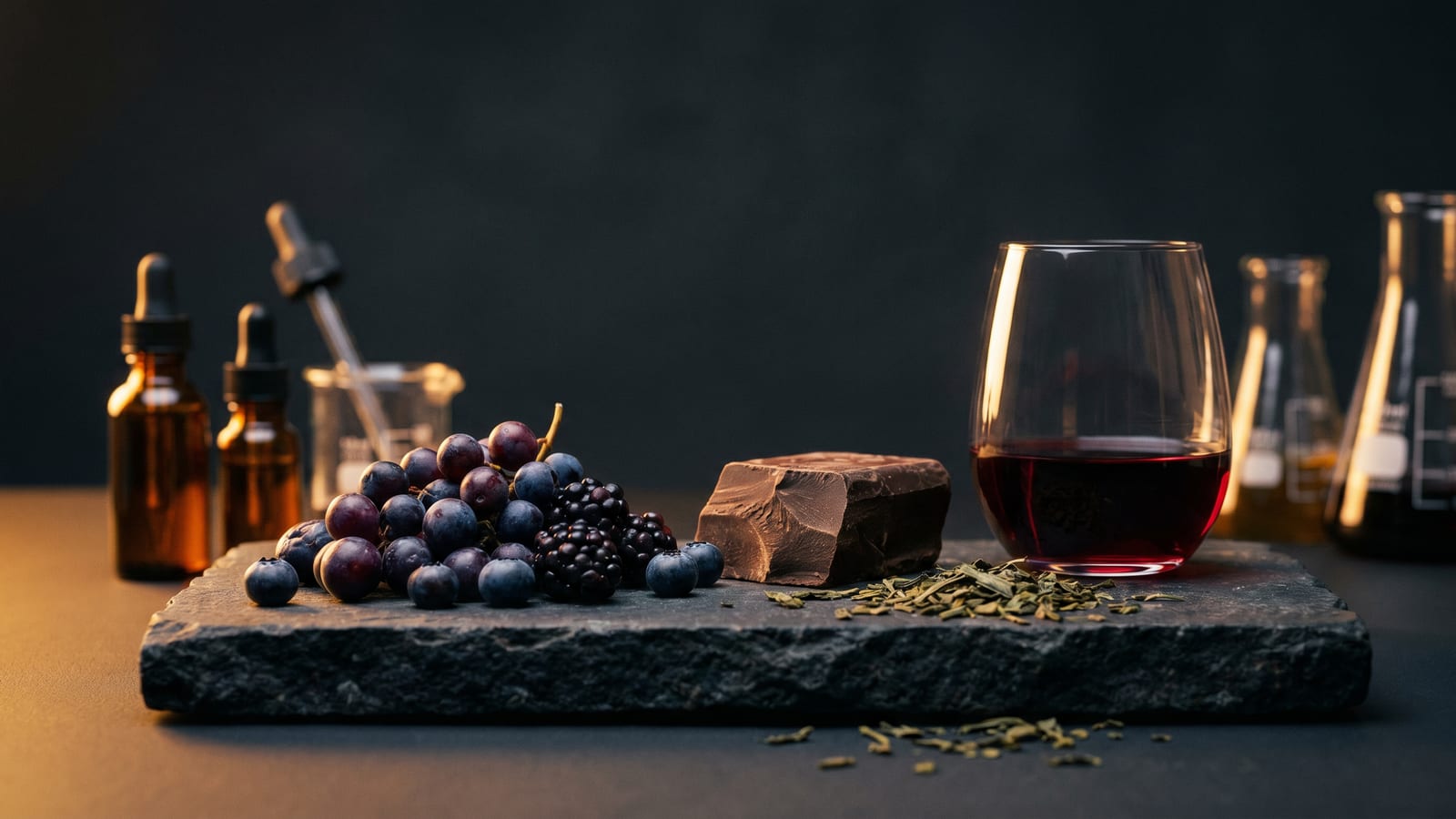
Polyphenols are the rare category where the hype and the science actually overlap. Not completely, not without caveats, but enough that ignoring them is a mistake. The problem isn’t the compounds themselves. It’s that the supplement industry has wrapped genuinely interesting biology around products that your body can’t absorb, at markups that assume you won’t notice.
This guide covers what the evidence actually says, which forms are worth your money, and how to build a polyphenol strategy that isn’t just expensive urine.
What Are Polyphenols and Why They Matter for Longevity
Polyphenols aren’t a single compound. They’re a family of over 8,000 distinct plant chemicals, grouped into four main classes: flavonoids (the largest group, including quercetin, EGCG, and anthocyanins), phenolic acids (coffee’s main polyphenols), stilbenes (resveratrol), and lignans (found in flaxseed and sesame).
The epidemiological case for polyphenols is solid. Mediterranean diet populations, Blue Zone communities in Sardinia, Ikaria, and Okinawa all share one dietary pattern: high plant variety, high polyphenol intake, lower all-cause mortality. These are associations, not proof of causation, but they’re consistent across decades of data and multiple populations.
Mechanistically, polyphenols do things that longevity researchers actually care about. They activate NRF2 (the master antioxidant transcription factor), modulate AMPK (the cellular energy sensor also targeted by metformin and fasting), influence senescent cell clearance, and reshape the gut microbiome in ways that have downstream effects on inflammation and metabolic health.
The catch: bioavailability is the central issue. A compound that looks impressive in a cell culture but doesn’t reach meaningful concentrations in human tissue is scientifically interesting and practically irrelevant. This matters for almost every polyphenol on the market.
The Bioavailability Problem
Before resveratrol can activate anything in your cells, it has to survive your gut, get absorbed through the intestinal wall, pass through first-pass liver metabolism, and reach systemic circulation in a form that’s still biologically active. Most polyphenols are bad at this.
Resveratrol’s oral bioavailability sits around 20%. Quercetin is variable, somewhere between 2-17% depending on formulation and individual gut microbiome composition. Curcumin is the worst offender at roughly 1% from standard powder.
Several factors actually improve absorption:
- Phospholipid formulations bind polyphenols to phosphatidylcholine, dramatically improving intestinal uptake
- Piperine (black pepper extract) inhibits glucuronidation, the liver enzyme that degrades many polyphenols before they circulate
- Nanoparticle delivery (Longvida curcumin) reduces particle size to improve mucosal absorption
- Fat co-consumption helps with fat-soluble polyphenols; taking supplements with a meal containing fat is a simple free upgrade
Whole foods have a natural advantage here. The fiber matrix, naturally occurring fats, and synergistic compounds in berries, olive oil, and cocoa improve absorption in ways that isolated powder can’t replicate. This doesn’t mean supplements are useless. It means formulation matters enormously, and a 95% curcumin extract in a capsule with zero bioavailability tech is mostly wasted money regardless of the purity on the label.
Resveratrol
Resveratrol got famous because of David Sinclair’s research on SIRT1 activation. The initial framing was compelling: red wine’s polyphenol extends lifespan in yeast by activating sirtuins, and here’s the molecule responsible. Supplements followed within years of the publications.
The honest update on the mechanism: resveratrol’s effect on SIRT1 in mammals is indirect, not the clean direct activation the early papers suggested. It appears to work primarily through AMPK activation and NAD+ elevation, with downstream sirtuin effects. The direct SIRT1 activation claim, specifically the enzyme pocket binding story, didn’t hold up well under independent scrutiny in mammalian models.
Does that mean resveratrol doesn’t work? Not exactly. The human trial data on cardiovascular markers, insulin sensitivity, and inflammatory biomarkers is modest but reasonably consistent. It’s not transformative, but several trials using 150-500mg/day showed meaningful improvements in metabolic parameters, particularly in populations with existing cardiovascular or metabolic risk.
Pterostilbene deserves mention here. It’s structurally similar to resveratrol (a methylated stilbene) but has bioavailability of roughly 80% versus resveratrol’s 20%. If you’re choosing a stilbene supplement with no particular reason to favor resveratrol, pterostilbene is probably the smarter pick. Resveratrol has the larger human trial database, which matters if you’re tracking specific endpoints, but for general use pterostilbene’s absorption advantage is significant.
Curcumin
Curcumin is the active compound in turmeric and one of the most-studied anti-inflammatory polyphenols in existence. The mechanistic case is strong: NRF2 activation, NF-kB suppression (a key inflammatory signaling pathway), and AMPK modulation. Human data on inflammatory markers like CRP and IL-6, osteoarthritis pain, and cognitive function all show moderate positive signals, particularly in populations with inflammation-driven conditions.
The problem is that 1% oral bioavailability. Eating turmeric isn’t curcumin supplementation. Taking plain curcumin powder is only marginally better.
Three formulations with actual absorption evidence:
Meriva (phospholipid complex): Multiple studies showing significantly higher plasma curcumin versus standard extract. Meriva-based products are widely available and the research base is solid.
Longvida (SLCP nanoparticle form): Designed specifically for blood-brain barrier crossing; relevant if cognitive endpoints are your primary interest.
Piperine co-administration: One study showed a 2000% increase in curcumin bioavailability from piperine. This is the budget option. Standard curcumin extract plus black pepper extract (or a product with both) is a reasonable entry point.
Plain curcumin powder with no formulation is largely wasted money. Skip it regardless of price per gram. The absorption problem is real enough that formulation matters more than dosage.
Quercetin and EGCG
Quercetin does several things worth noting. It’s a broad anti-inflammatory, a mast cell stabilizer (relevant for people with histamine sensitivity), and has modest antiviral properties. The most interesting longevity angle is its potential as a senolytic, specifically its role in the dasatinib + quercetin (D+Q) protocol studied in early-phase human senolytic trials.
A reality check is warranted here. D+Q uses pharmaceutical-grade quercetin at specific doses in specific cycles, not daily supplementation at standard doses. The senolytic mechanism requires quercetin to reach concentrations that over-the-counter supplements may not achieve in the relevant tissues. Standard 500-1000mg/day quercetin supplementation is anti-inflammatory and probably beneficial for that reason alone, but calling it a senolytic protocol at that dose overstates the current evidence. Take that claim with appropriate skepticism when you see it on product pages.
Quercetin absorption improves significantly with lipid co-consumption or piperine. This matters for dosing calculations.
EGCG is green tea’s primary catechin and arguably the most practical polyphenol in this entire guide, because the delivery vehicle (green tea) is one of the most bioavailable options you have. EGCG activates NRF2 and AMPK, improves insulin sensitivity, and has a reasonable evidence base for cardiovascular health.
One important safety flag: high-dose green tea extract supplements have a liver toxicity signal. Several case reports and at least one systematic review have linked high-dose EGCG (above 800mg/day) to hepatotoxicity. This isn’t a reason to avoid EGCG, it’s a reason to stay below 400mg/day in supplemental form and not assume more is better. Drinking 2-3 cups of green tea daily provides meaningful EGCG with a long safety record at that dose.
Building a Polyphenol-Rich Longevity Strategy
Food first. This isn’t a cop-out; it’s genuinely the highest-impact move because the food matrix improves absorption, provides synergistic compounds, and has a longer human track record than any supplement.
Specific targets worth building habits around:
- Blueberries and dark berries (anthocyanins): 1-2 cups/day. Frozen is fine and often cheaper.
- Pomegranate (punicalagins): 1/4 cup seeds or a small glass of juice. Punicalagins convert to urolithins in the gut, which have separate longevity-relevant mechanisms.
- Extra virgin olive oil (oleocanthal, hydroxytyrosol): 2-3 tablespoons/day. The oleocanthal content varies by producer; fresh, peppery-tasting EVOO has more.
- Dark chocolate / cocoa (flavanols): 20-30g of 85%+ chocolate or a tablespoon of unsweetened cocoa. The flavanol content drops sharply below 70% cacao.
- Green tea (EGCG): 2-3 cups/day, brewed at 70-80°C for best catechin extraction, or 200mg EGCG extract if you don’t drink tea.
- Onions, capers, apples (quercetin sources): easy to incorporate daily without thinking about it.
If you want to supplement beyond food, here’s the practical stack:
Curcumin: formulated product only. Meriva-based or piperine-containing products. Not plain extract.
Pterostilbene: more bioavailable than resveratrol, reasonable choice if you want a stilbene. 50-150mg/day is a common research range.
Quercetin: 500mg+ with a lipid-containing meal or piperine for absorption. Worth it for anti-inflammatory effects; the senolytic dose is higher and the protocol more complex.
Green tea extract: stay at or below 400mg EGCG/day. Take with food.
You don’t need all of these. Pick the two or three that address your specific health goals, get the formulation right, and be consistent. Stacking seven poorly absorbed supplements doesn’t compound the benefit; it mostly compounds the expense.
Frequently Asked Questions
What’s the best polyphenol for longevity? There isn’t one. The evidence points to diversity of polyphenol sources, not a single compound. If you had to pick one food habit, berries and olive oil daily has the strongest combined epidemiological and mechanistic case.
Does resveratrol actually activate SIRT1? Indirectly, yes. The direct activation mechanism in mammals is weak. Resveratrol’s effects likely run through AMPK and NAD+ elevation, with downstream sirtuin activity. The outcomes in human trials are real but modest.
Is curcumin worth taking without piperine? No. Standard curcumin extract without absorption technology is close to useless. Bioavailability is approximately 1%. Spend the money on a formulated product or add black pepper extract.
Pterostilbene vs resveratrol: which is better? Pterostilbene for absorption (roughly 80% vs 20%). Resveratrol if you want the larger human trial database and care about specific endpoints that have been studied in humans. For general longevity purposes, pterostilbene is the more practical choice.
Can I get enough polyphenols from food alone? For most people, yes. A diet that includes daily berries, olive oil, green tea, dark chocolate, and a variety of colorful vegetables delivers meaningful polyphenol intake with good bioavailability. Supplements add breadth of coverage and higher doses, not a fundamentally different mechanism.
How much EGCG is too much? Above 800mg/day from supplements, liver toxicity risk increases. Stay under 400mg/day from extracted forms. Green tea as brewed tea doesn’t carry the same risk at normal consumption levels.
Does quercetin really work as a senolytic? At pharmaceutical doses used in D+Q protocols, there’s early human evidence. At standard supplement doses (500-1000mg/day), the anti-inflammatory effects are real but calling it senolytic is a stretch. The evidence for that claim is still thin at OTC doses.
Are polyphenol supplements safe long-term? Generally yes at reasonable doses, with the EGCG caveat above. Most polyphenols have wide safety margins. Long-term human data at high supplemental doses is limited for most compounds. Food-form polyphenols have the best long-term safety record.
What’s the connection between polyphenols and the gut microbiome? Most polyphenols aren’t absorbed in the small intestine. They pass into the colon where gut bacteria metabolize them into secondary metabolites (like urolithins from pomegranate, or equol from isoflavones) that may be more bioactive than the parent compounds. Your individual microbiome composition affects how much benefit you get from polyphenols, which is one reason individual responses vary significantly.