Precision Probiotics - Are They Worth the Cost?
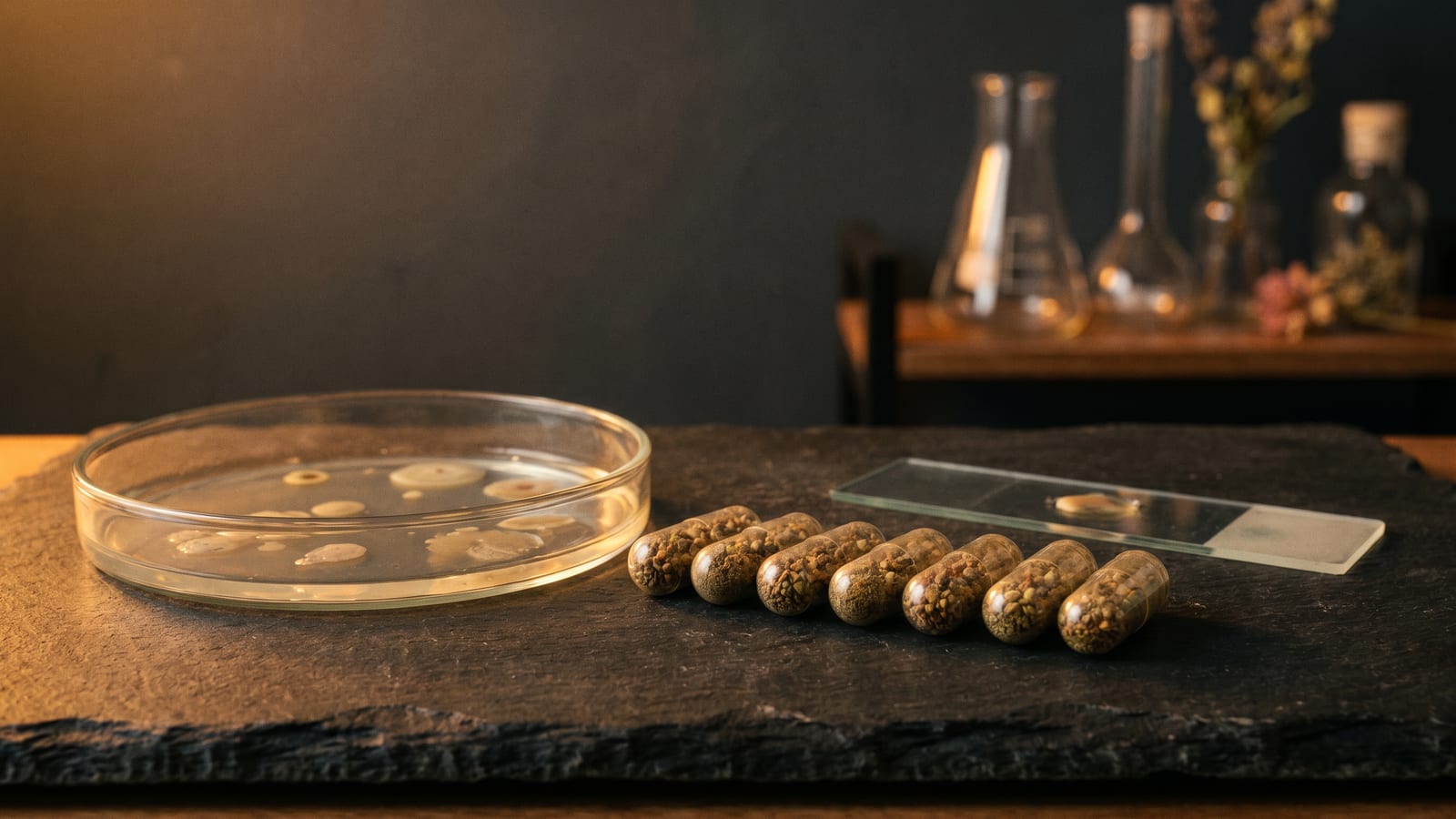
Precision probiotics are the personalized version of this idea. The pitch is compelling: your gut microbiome is unique, generic probiotics are designed for no one in particular, so a formulation matched to your specific bacterial profile should work better. It makes intuitive sense.
Here’s the problem: intuition and evidence are two different things. The gut microbiome science is genuinely exciting and moving fast. The commercial translation of that science into probiotic recommendations is, for most people, still ahead of what the data actually supports.
This article walks through how precision probiotics work, what the testing actually measures, and where the evidence lands. The goal isn’t to write off personalized approaches entirely. It’s to help you figure out whether you’re looking at a meaningful advance or a well-packaged idea that costs ten times more than it should.
What Are Precision Probiotics
Generic probiotics are blends of well-studied strains, mostly Lactobacillus and Bifidobacterium species, formulated for broad populations. The logic: these strains have the most clinical research behind them, so they’re a reasonable default.
Precision probiotics flip that model. You send in a stool sample, a lab sequences your microbiome, and a report identifies which bacterial populations are over- or underrepresented compared to a reference database. The company then formulates a probiotic blend, or recommends dietary changes, supposedly calibrated to what your specific gut is missing.
The appeal is obvious. But the process has several points where the science gets thin, and most companies don’t advertise those points.
Your Gut Microbiome - Why It Matters
The gut contains trillions of bacteria, archaea, fungi, and viruses. Collectively, this community weighs roughly 1 to 2 kilograms. It’s not decorative. It does real work.
Key functions include breaking down dietary fiber and polyphenols into short-chain fatty acids (SCFAs like butyrate, propionate, and acetate), educating the immune system, influencing the gut-brain axis through neurotransmitter production, and synthesizing vitamins like K2 and several B vitamins. A disrupted microbiome has been associated with metabolic conditions, autoimmune disease, mood disorders, and more.
The diversity hypothesis holds that a microbiome with greater species diversity is generally associated with better health outcomes. Lower diversity shows up consistently in obesity, type 2 diabetes, IBD, and colorectal cancer cohorts.
The caveat worth taking seriously: virtually all of this is correlational. We know that certain microbiome profiles co-occur with certain conditions. We’re much less clear on which direction causality runs, or how much the microbiome is driving the outcome versus reflecting something else about how a person lives.
How Microbiome Testing Works
The testing process is straightforward on the surface. You collect a small stool sample at home, mail it to a lab, and the lab sequences the bacterial DNA in the sample.
Two main approaches exist. 16S rRNA sequencing targets a specific gene present in all bacteria. It’s relatively cheap, identifies microbes down to genus level (sometimes species level), but can’t tell you much about what those bacteria are actually doing functionally. Shotgun metagenomic sequencing sequences everything in the sample, giving you species and strain resolution plus the ability to infer functional pathways. It costs more and requires more computational analysis, but gives a richer picture.
Both methods have a limitation most companies don’t highlight clearly: stool is a flawed proxy for what’s actually happening in your gut. The microbiome composition in stool reflects the large intestine. It doesn’t tell you what’s happening in the small intestine, which is where most digestion and nutrient absorption occurs. It doesn’t reflect the mucosal microbiome, the bacteria living in biofilms along the gut lining, which interact with the immune system differently than luminal bacteria. And it’s a snapshot of one moment in time. Your microbiome changes with diet, stress, illness, antibiotics, and the season. A single stool sample, however well-analyzed, captures one slice.
Then there’s the strain-specificity problem. Probiotic efficacy is strain-specific. L. rhamnosus GG performs differently than other L. rhamnosus strains. The clinical evidence for specific strains often doesn’t transfer to related strains. But commercial microbiome tests mostly can’t reliably identify strains from stool samples, they identify species at best. So the foundation of truly personalized strain recommendations doesn’t exist in the current commercial testing stack.
What Precision Probiotic Companies Actually Do
The process is roughly consistent across services like Viome, Ombre (formerly Thryve), Atlas Biomed, and Tiny Health. You get a test kit, send a sample, receive a report with a breakdown of your microbiome composition relative to a reference range, and the company recommends a custom-formulated probiotic subscription plus dietary changes.
The reports look authoritative. They typically show which bacterial groups are elevated or depleted, flag functional pathway estimates (butyrate production, protein fermentation, etc.), and assign a score or health rating.
What the reports don’t tell you is how the recommendation algorithm works, whether the algorithm has been validated against clinical outcomes, or what the confidence intervals look like on the functional pathway estimates. The matching logic is proprietary. The reference databases differ between companies. Two companies can analyze the same stool sample and produce different recommendations, a documented phenomenon that should give you pause.
This isn’t to say the companies are acting in bad faith. The science is genuinely uncertain. But the presentation often implies more precision than the underlying data supports.
The Evidence - What Actually Works
Let’s separate what we actually know from what’s being implied.
Generic probiotics have a reasonably solid evidence base for specific conditions. L. rhamnosus GG and Saccharomyces boulardii have strong evidence for preventing antibiotic-associated diarrhea. Bifidobacterium bifidum and L. plantarum 299v have moderate evidence for IBS symptom reduction in some patients. These aren’t miracle supplements. They help a subset of people, for specific indications, with effect sizes that are meaningful but not dramatic.
Precision probiotics have thin evidence at the clinical outcomes level. A 2021 Nature Medicine RCT showed that a precision-designed probiotic blend reduced inflammatory markers compared to a generic blend in a post-antibiotic recovery context. That’s promising. It’s also a single study. The chain “microbiome test to personalized formulation to measurable health outcome” has essentially no large-scale RCT support. We have evidence probiotics work for some conditions. We have almost no evidence that matching them to your microbiome beats choosing evidence-backed strains on the basis of the condition you’re actually trying to address.
The personalization story is compelling. The evidence base for acting on it, right now, at significant cost, is not.
What Changes the Microbiome More Than Probiotics
Diet is the dominant factor, and by a significant margin. The bacteria in your gut live or die based on what you feed them.
Fiber diversity matters more than fiber quantity. Eating 30+ different plant foods per week consistently correlates with greater microbiome diversity. Fermented foods (yogurt, kefir, kimchi, sauerkraut, kombucha) introduce live bacteria and have a meaningful effect on microbiome composition.
A 2021 study published in Cell compared a high-fermented-food diet against a high-fiber diet over 10 weeks. The fermented food group showed increased microbiome diversity and reduced levels of inflammatory markers. The high-fiber group showed more complex, individual-specific responses. The finding that fermented foods outperformed fiber for diversity and inflammation is notable, and underreported in the probiotic conversation.
Sleep quality, chronic stress, and exercise all influence microbiome composition as well. These aren’t minor modifiers.
The practical implication: if you’re spending $200 to $400 per year on precision probiotic subscriptions while eating 15 different plants per week and sleeping 5 hours a night, you’re optimizing the wrong variable.
When Precision Testing Might Actually Be Worth It
The skeptical framing above has limits. There are situations where more information about your gut makes sense.
Worth considering for:
- IBS or functional gut disorders where you’ve already tried evidence-backed generic probiotics for 8+ weeks without benefit
- Unresolved dysbiosis after a course of antibiotics that hasn’t self-corrected after 3 or more months
- IBD management as part of a medical protocol, ideally with a gastroenterologist in the loop
- Pediatric gut issues where a more targeted picture might help guide dietary changes (Tiny Health’s focus)
Worth skipping for:
- Healthy people with no gut symptoms who want “optimization”
- Anyone expecting precision probiotics to produce systemic benefits beyond gut health
- People on a budget, because the generic evidence-backed options cost a fraction of the price and the outcome evidence doesn’t justify the premium for most people
The technology will likely get better. Longitudinal sampling, mucosal biopsies, functional outputs from metagenomics, and better-validated matching algorithms could genuinely change the value proposition. Right now, most of that isn’t commercially available.
How to Choose a Generic Probiotic If Testing Isn’t Worth It
If you decide the precision route isn’t right for you, here’s what to look for in a standard probiotic.
Look for strains, not just species. A label that says “Lactobacillus acidophilus” tells you almost nothing. You want strains with documented human trial evidence, like L. rhamnosus GG, L. plantarum 299v, or Bifidobacterium longum 35624. If the strain designation is missing, the clinical evidence doesn’t transfer.
Evidence-backed strains worth knowing:
- L. rhamnosus GG: antibiotic-associated diarrhea, some immune evidence
- Saccharomyces boulardii: antibiotic diarrhea, traveler’s diarrhea
- Bifidobacterium lactis BB-12: gut comfort, some immune data
- L. plantarum 299v: IBS, some stress-related gut data
- Bifidobacterium longum 35624: IBS, inflammatory marker data
CFU count: More isn’t better. 1 to 10 billion CFU from a strain with clinical evidence is more useful than 100 billion CFU from a generic blend. The colonization question is complex and higher doses don’t reliably mean better outcomes.
Shelf stability: Probiotics are live bacteria. Look for products with verified shelf-life data, either refrigerated or in desiccated/enteric-coated formats that can survive room temperature storage.
Frequently Asked Questions
Is microbiome testing accurate? Moderately. At the genus and species level, 16S sequencing gives a reasonable picture of composition. Functional predictions (what your bacteria are doing, not just which ones are there) are estimates based on inference, not direct measurement. Neither type of test is a diagnostic tool for any condition.
Can precision probiotics cure IBS? No. IBS is multifactorial with neurological, psychological, and gut motility components alongside microbiome factors. Probiotics help some IBS patients, some of the time, with specific symptoms. Expecting a cure from any probiotic, generic or personalized, is a mismatch with the evidence.
Are precision probiotics worth the cost? For most people, no. The evidence premium for personalized formulations over evidence-backed generics isn’t there yet. For people with specific, refractory gut conditions who’ve exhausted standard approaches, the added information might be worth the cost, with realistic expectations.
Can I improve my microbiome without probiotics? Yes, and probably more effectively. Dietary fiber diversity, regular consumption of fermented foods, adequate sleep, stress reduction, and consistent exercise all have stronger and more consistent evidence for improving microbiome diversity and function than probiotic supplementation. Probiotics are a targeted tool for specific situations, not a substitute for the foundations.
The gut microbiome is one of the more interesting frontiers in human biology right now. The precision probiotics industry is asking the right question: does personalization improve outcomes? The honest answer is that the evidence to back a “yes” at the population level doesn’t exist yet. That’s not a reason to dismiss the science. It’s a reason to watch it carefully, and to be clear-eyed about what you’re paying for when you buy a subscription today.