GLP-1 and Muscle Loss – How to Preserve Lean Mass on Semaglutide or Tirzepatide
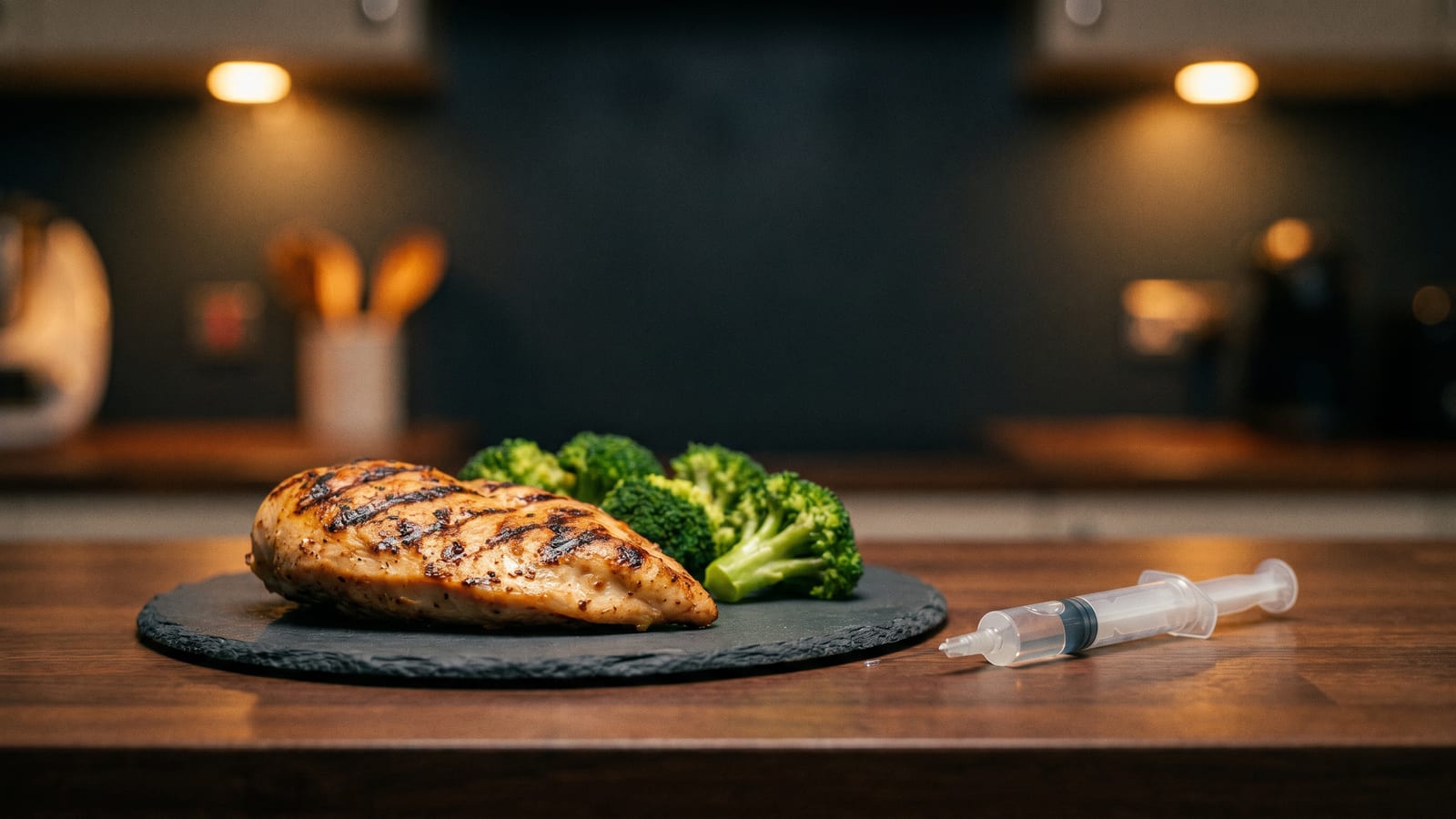
GLP-1 receptor agonists like semaglutide and tirzepatide are genuinely effective tools for weight loss. But “weight loss” and “fat loss” are not the same thing, and if you’re on one of these medications without a structured lifestyle protocol, a meaningful chunk of what you’re losing is muscle.
That’s not a reason to avoid GLP-1 therapy. It is a reason to pay attention. This article covers what the trial data actually shows, why muscle loss happens mechanistically, and the specific levers you can pull to preserve lean mass while the medication does its job on your fat stores.
Why GLP-1s Cause Muscle Loss
The mechanism here isn’t unique to GLP-1 drugs. It’s a fundamental feature of caloric restriction. Your brain runs primarily on glucose. Fat, despite being a large energy store, cannot be efficiently converted to glucose. When you’re in a sustained caloric deficit, the body needs another source of glucose precursors, so it breaks down muscle protein through what’s called the glucose-alanine cycle: skeletal muscle releases alanine, the liver converts it to glucose, the brain gets fed.
Dr. Caroline Apovian at Mass General has been clear on this point in her work on pharmacological obesity treatment: the lean mass loss seen with GLP-1s is an amplified version of what happens with any aggressive caloric restriction, not a drug-specific quirk. GLP-1s work by suppressing appetite powerfully, which means the deficit tends to be larger and the weight loss faster than most people achieve through willpower alone. Faster and greater weight loss means more opportunity for muscle catabolism.
The good news: the mechanism is interruptible. Some lean mass loss is expected and not catastrophic. The goal is not zero muscle loss, but managing the ratio.
How Much Muscle Are We Talking About?
Trial data gives you a real baseline. In the STEP 1 trial (semaglutide 2.4 mg, n=1961), participants lost an average of about 15% of body weight over 68 weeks. Roughly 40% of that weight came from lean mass rather than fat. For someone starting at 100 kg who loses 15 kg, that’s about 6 kg of lean tissue gone alongside 9 kg of fat.
Tirzepatide looks somewhat better in isolation. In the SURMOUNT-1 trial, lean mass accounted for approximately 26% of total weight lost. But there’s a catch: tirzepatide produces greater overall weight loss (up to 22% body weight in SURMOUNT-1). A 2026 medrxiv preprint analyzing real-world data found that tirzepatide may produce greater absolute lean mass decline than semaglutide, partly because of greater exercise intolerance reported on tirzepatide at therapeutic doses. The better lean mass percentage doesn’t fully offset the larger absolute loss.
Important caveat on the trial data: lean mass measurements in STEP and SURMOUNT came from DXA scans in a subset of participants, not the full cohort. These numbers are directionally useful, not perfectly precise.
The counterpoint is worth noting. A case series by Tinsley and Nadolsky (PMC, October 2025) examined individuals on GLP-1 therapy who received structured lifestyle support including resistance training and high protein intake. Their lean mass preservation outcomes were substantially better than the trial averages. The trials didn’t control for training or protein intake. That’s why the headline numbers look worse than what’s achievable with deliberate effort.
The Three Pillars of Muscle Preservation on GLP-1 Therapy
This is where you actually have control.
Protein: More Than You Think
Most people on GLP-1s naturally eat less. That’s the point. But if protein intake drops along with total calories, you’ve removed the main substrate your body uses to maintain and repair muscle. The appetite suppression doesn’t care about macronutrient ratios.
Current evidence supports targeting 1.2 to 1.6 g of protein per kg of total body weight per day during weight loss, or more precisely, 1.6 to 2.3 g per kg of fat-free mass (FFM). Targeting FFM is more accurate during obesity treatment because excess body fat doesn’t need protein to maintain itself. For a 90 kg person with 30% body fat, FFM is roughly 63 kg, putting the protein target at 100 to 145 g per day.
Individual meals matter too. Leucine is the key amino acid for triggering muscle protein synthesis signaling, and the threshold is around 2.5 to 3 g of leucine per meal. That’s roughly what you get from 30 to 40 g of high-quality protein in a single sitting. Whole food sources first: meat, fish, dairy, eggs. Whey protein is a practical supplement when appetite suppression makes it hard to hit targets through food alone.
Resistance Training: Non-Negotiable
Cardio is not the tool here. Resistance training is.
Three to five sessions per week with deliberate load on the major muscle groups and progressive overload over time. The stimulus that tells the body “keep this tissue” is mechanical tension on muscle. Without that signal, you’re relying entirely on dietary protein to slow catabolism, and it’s not enough on its own.
The STEP and SURMOUNT trials did not include structured resistance training protocols. That’s a major reason their lean mass loss numbers look as bad as they do. When Tinsley and Nadolsky’s case series applied a structured training protocol alongside GLP-1 therapy, the outcomes improved substantially.
Start training at GLP-1 initiation, not after reaching goal weight. Waiting until you’ve “finished losing” means losing muscle the entire time and trying to rebuild it later, which is harder and slower than preserving it in the first place. Bodyweight work is better than nothing if equipment isn’t available, but progressive loading with weights produces stronger muscle preservation signals.
Cardio: Useful but Not the Primary Lever
Cardio supports cardiovascular health and metabolic function, and there’s no reason to avoid it. But it does not protect muscle the way resistance training does. If you have limited time and energy, especially early in GLP-1 therapy when fatigue and nausea may be factors, resistance training takes priority over additional cardio sessions.
Eating Window and Time-Restricted Eating
There’s a mechanistic argument for moderate time-restricted eating (TRE) during GLP-1 therapy. When carbohydrate intake is lower or when you’re in an overnight fast, the liver produces ketone bodies. The brain can use ketones as fuel in place of glucose, which reduces the demand on the glucose-alanine cycle and, in theory, slows muscle catabolism.
The Tinsley and Nadolsky case series incorporated 12 to 13 hour eating windows as part of their lifestyle stack alongside protein targets and resistance training. It’s not possible to isolate the contribution of TRE from that dataset, but it’s a low-risk addition. You’re likely already fasting 10 to 12 hours overnight; extending to 12 to 13 hours is a modest change.
Label this as emerging and plausible rather than established. The mechanistic rationale is solid; the clinical data specific to GLP-1 plus TRE is limited. It’s worth experimenting with if it fits your schedule and doesn’t compromise protein intake.
Which GLP-1 Causes More Muscle Loss?
Semaglutide and tirzepatide are not equivalent on this dimension.
Tirzepatide’s dual GIP/GLP-1 mechanism produces more total weight loss. In direct comparisons and real-world data, it outperforms semaglutide on overall body weight reduction. That’s the primary selling point. But the 2026 medrxiv preprint on real-world body composition data found greater absolute lean body mass decline with tirzepatide versus semaglutide, with greater exercise intolerance cited as a contributing factor. If you’re struggling to train consistently on tirzepatide, you’re losing one of the main tools for muscle preservation.
This is a real tradeoff, and worth discussing with whoever is managing your medication. It doesn’t mean tirzepatide is wrong for you, and individual responses vary considerably. But if muscle preservation is a top priority and you’re finding exercise difficult on tirzepatide at your current dose, that’s a relevant data point.
Who Should Be More Concerned?
Lean mass loss is manageable for most people with a reasonable lifestyle protocol. It’s a larger concern for specific groups.
Older adults lose muscle more easily and rebuild it more slowly. Women post-menopause face additional risk from bone density loss alongside muscle. People with pre-existing frailty or low muscle mass who then lose substantial lean tissue can cross into functional impairment. Rapid weight loss without any structured lifestyle support is where the risks compound.
If you’re in any of these categories, the protein and resistance training targets are more important, not less. Starting earlier and being more deliberate about monitoring is warranted. DXA body composition scans at baseline and after six months of therapy give you actual data rather than estimates. Arrange one if you have access to a clinic that offers it.
FAQ
Can I regain lost muscle after stopping GLP-1s? Yes. With adequate protein intake and consistent resistance training, muscle can be rebuilt. It takes time, and it’s easier to have preserved it in the first place, but it’s not a permanent loss.
Do I need supplements? Creatine and whey protein are the most evidence-backed options here. Creatine supports strength output and muscle volume, and there’s emerging data suggesting it may also support cognitive function during caloric restriction. Whey is a practical way to hit protein targets when appetite is suppressed.
Will prioritizing protein blunt fat loss? No. The caloric deficit driving fat loss comes from the medication’s appetite suppression effect. High protein intake within your total calorie budget supports muscle preservation without meaningfully reducing fat loss.
How long before resistance training produces results? Strength adaptations (neurological, before visible muscle change) appear within 4 to 8 weeks. Changes in body composition measurable by DXA take longer, typically three to six months of consistent training. Don’t expect to see it in the mirror in the first month; expect to feel it in the gym.