Oura vs Whoop: Which Sleep Tracker Is Actually Worth It?
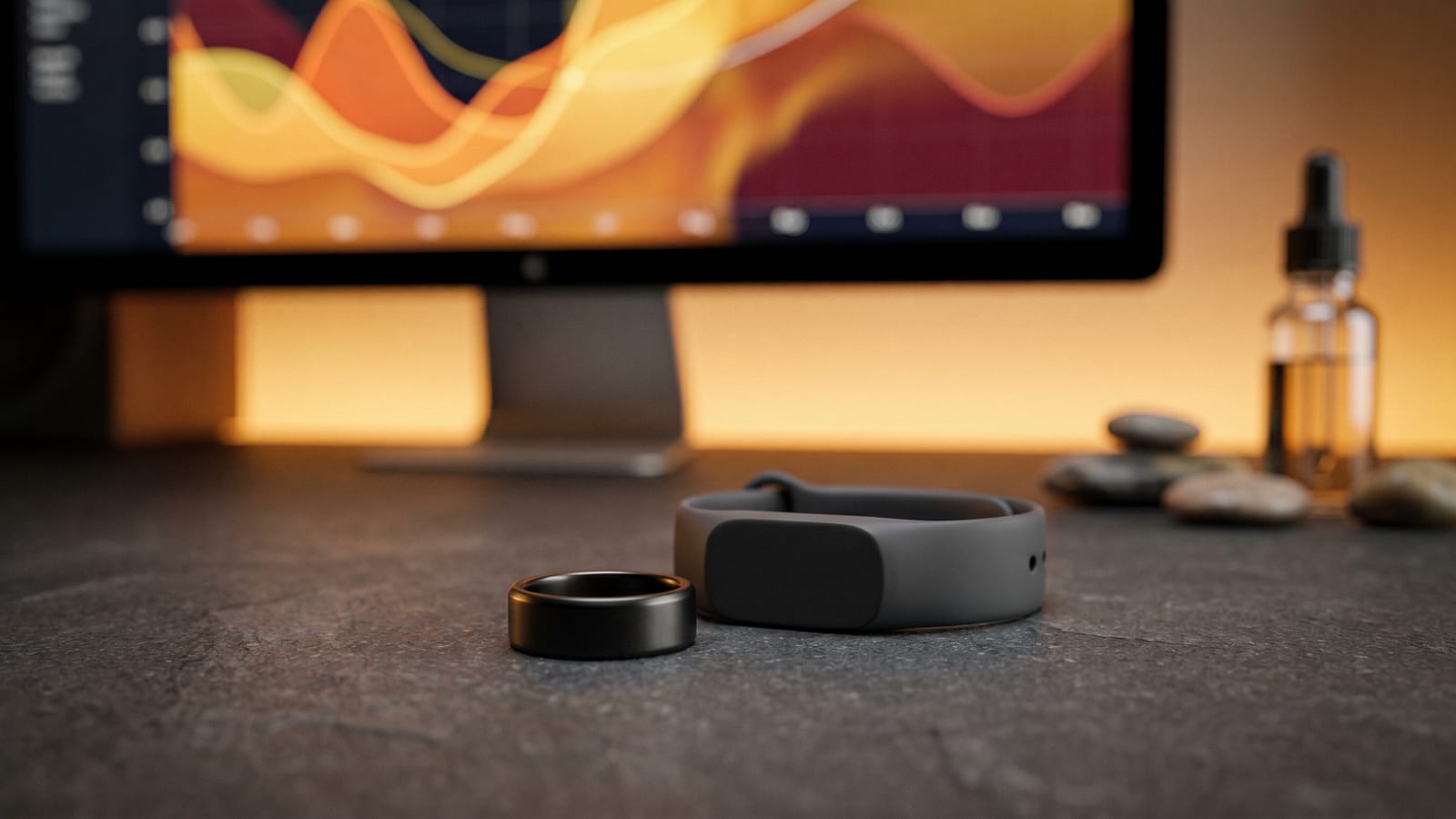
Two devices dominate the serious end of the wearable market, and both are genuinely good. That’s what makes choosing between them annoying. Oura and Whoop are not the same device with different aesthetics. They’re built around different philosophies: Oura optimizes for sleep and holistic recovery; Whoop optimizes for training load and athletic performance. You can be happy with either. But you’ll be happier if you buy the one that matches what you actually care about.
Short version: athletes managing training load should look at Whoop. Everyone else - sleep-focused biohackers, people tracking menstrual cycles, anyone who wants a temperature sensor and doesn’t want a subscription eating $30/month - should buy the Oura Ring.
That calculus isn’t arbitrary. Let’s get into why.
What These Devices Actually Measure
Both Oura and Whoop use PPG: photoplethysmography. An LED shines light through your skin, and the sensor measures how blood volume changes with each heartbeat. From that signal, both devices derive heart rate, heart rate variability, respiratory rate, and infer sleep states.
Here’s what they do NOT measure: brain activity. Neither device has EEG sensors. Sleep staging in clinical research is done with polysomnography (PSG), which attaches electrodes to your scalp, eyes, and chin. That’s the gold standard. True HRV, the kind used in research, comes from ECG, which captures the precise electrical waveform of each heartbeat. What Oura and Whoop give you is a reasonable proxy, not a clinical measurement.
Consumer wearables hit roughly 70-80% agreement with clinical sleep studies on total sleep time. For specific sleep stages, the accuracy drops considerably. The devices are better at detecting when you’re asleep versus awake than they are at telling you whether a given hour was light sleep, REM, or deep sleep.
This isn’t a reason to dismiss them. It’s a reason to use them correctly. A single night’s data tells you less than you think. Two months of data showing your deep sleep trending down whenever you drink alcohol on a Tuesday tells you a lot. Trends over time are where the value lives.
Core Metrics Compared
Oura produces three primary scores: Readiness, Sleep, and Activity. The Readiness Score is a composite input pulling from sleep, HRV, resting heart rate, body temperature, and activity balance. Sleep Score breaks down into sleep duration, efficiency, REM, deep sleep, timing, and latency. Activity Score rewards movement across the day without punishing you for rest days the way some platforms do.
Whoop centers around two numbers: Recovery and Strain. Recovery is heavily weighted toward HRV and resting heart rate from the previous night’s sleep. Strain is a training load model that uses heart rate zone data across the full day, not just during workouts. Whoop also tracks Sleep Performance as a percentage of sleep debt repaid versus what your body needed.
The Readiness vs. Recovery comparison is worth unpacking. Oura’s Readiness is broad by design. It factors in temperature deviation, sleep quality, activity from the previous days, and recovery metrics together. Whoop’s Recovery leans hard on HRV. If your HRV is high, you’re green. If it’s low, you’re red. This makes Whoop more interpretable for athletic purposes and sometimes less nuanced for general health monitoring.
Oura’s temperature sensor is the most underrated feature in this comparison. It measures skin temperature continuously and detects deviations from your personal baseline. The practical applications are real: early illness detection (your temperature often spikes before you feel sick), menstrual cycle phase tracking, and overtraining signals. Whoop does not have a comparable temperature sensor.
Whoop’s Strain model is more sophisticated than Oura’s activity tracking for athletes. It accounts for heart rate zone time, not just movement. A 90-minute moderate zone 2 run and a 90-minute high-intensity interval session produce different strain scores, which is the right behavior. Oura’s activity ring counts steps and estimates exertion but lacks the zone-based granularity.
The Accuracy Question - What the Research Shows
When a company says their device measures sleep stages, they mean it estimates sleep stages from PPG data using a machine learning model trained on populations of people wearing both their device and clinical-grade EEG simultaneously. That model has error rates. Those error rates are not evenly distributed across all users.
For HRV specifically, both devices produce reasonable numbers. But HRV from PPG is sensitive to things ECG is not: motion artifact, ambient light, device placement, skin tone, and even the specific algorithm used to extract peaks from the waveform. You will see different numbers from Oura and Whoop even if you wear both on the same night, because they use different algorithms, different sensor placements, and different averaging windows.
That said, within-device consistency is good. Your Oura HRV on a stressed week versus a recovery week will show the real trend even if the absolute number differs from what a clinical ECG would give you. Trust the direction, not the absolute value.
Sleep staging is where you should have the lowest expectations. Neither device reliably distinguishes REM from light sleep. Both get better at gross sleep versus wake detection, and both are reasonably accurate at total sleep time. If you see a night scored as 80% light sleep and 3% deep sleep, don’t panic. The algorithm had a hard night.
Oura’s temperature sensor works best as a deviation tracker. Your absolute wrist skin temperature varies throughout the night and is influenced by room temperature, what you ate, and how deep under the covers you are. What Oura reliably detects is when your temperature is higher than YOUR personal normal. That relative signal is genuinely useful.
The Real Cost Comparison
This is where most comparisons fail you. Looking at hardware price alone is misleading.
Oura Ring Gen 4 runs $299-349 depending on finish. The subscription is $5.99/month. You own the hardware. At three years: roughly $515-565 total.
Whoop charges $239-299 for the hardware, but you don’t truly own it the same way. The monthly subscription is around $30/month, though Whoop bundles hardware into some plans at lower effective rates. If you pay for hardware and subscribe, three years runs approximately $1,100-1,300.
That’s a real difference. Oura costs about half as much over three years as Whoop. If you’re considering both and you’re not a serious athlete, this alone should settle it. Whoop’s subscription is five times Oura’s monthly rate.
Whoop’s pricing model works better if you’re an athlete who gets specific value from the Strain tracking and coach integration. For general biohacking and health optimization, paying the Whoop premium requires a clear answer to: “What am I getting from Whoop’s platform that justifies an extra $700 over three years?”
Which Is Better for Athletes
Whoop is the better tool for managing training load. If you’re running structured training blocks, cycling with power, doing CrossFit, or managing periodization of any kind, Whoop’s Strain model tells you more than Oura’s Activity score. The Strain system accounts for cumulative load in a way that makes day-to-day training decisions easier to anchor.
Whoop’s coach integration and team features also matter if you’re in a coached program. The ability to share recovery data with a coach is something Oura doesn’t prioritize to the same degree.
Oura is not bad for athletes. HRV trend monitoring, temperature-based overtraining signals, and sleep quality data are all relevant to performance. But if training load management is your primary use case, Whoop was built for you. The Strain metric is genuinely its best feature.
Which Is Better for General Biohackers
If you’re not training for a race or managing periodized strength cycles, Oura is the better default choice, and it’s not particularly close.
The temperature sensor alone sets it apart. Knowing your temperature spiked 0.4 degrees from baseline the morning before you got sick is the kind of early warning signal that changes how you make decisions that day. For women tracking menstrual cycles, the temperature data maps onto cycle phases with enough precision to be genuinely useful alongside dedicated cycle tracking apps.
Oura’s sleep timing data rewards consistent sleep schedules in a way that reflects the actual research on circadian health. It’s not just tracking how long you sleep but when. Irregular sleep timing consistently hurts Readiness scores, which is behaviorally useful feedback.
The ring form factor matters for compliance. Wearing a chunky wrist device to sleep means some people don’t bother, or wake up having rolled onto it. The ring is less intrusive for most people. Compliance determines how much data you actually collect, and consistent data beats occasionally perfect data.
The cost difference matters here too. At $5.99/month, Oura’s ongoing cost is minimal. You buy it once and essentially own a long-term health sensor.
FAQ
Can either device replace a medical sleep study? No. A clinical polysomnography captures brain waves, eye movement, muscle activity, oxygen saturation, and more. Oura and Whoop give you behavioral trends, not clinical diagnoses.
Is the Whoop subscription worth it? For serious athletes: yes, if the Strain model changes how you train. For most users: no. The monthly cost at Whoop’s rate becomes significant over time, and the core data doesn’t justify the premium over Oura for non-athletes.
Does the Oura ring affect sleep quality? Minimally. Some people notice it the first few nights, then adapt. The ring is small enough that the majority of users report no disruption after the initial adjustment period.
How long until the data is actually useful? Give it two to four weeks before drawing conclusions. Both devices need to establish personal baselines for HRV, resting heart rate, and temperature before the scores become meaningful. Week one data is orientation, not analysis.
Can you use both together? Yes. Some people do, especially coaches and quantified-self enthusiasts who want to cross-validate. For most people it’s overkill. Pick one and commit to the trend data.
What’s the battery life? Oura Ring lasts four to seven days depending on usage. Whoop gets four to five days. Both require regular charging but neither is burdensome.
Do these devices actually improve your health? Only if you act on the data. Watching your recovery score tank for two weeks because you’re sleeping poorly and not changing anything is an expensive hobby. The devices surface patterns; behavior change is up to you.
Which is more accurate for HRV? Both produce reasonable proxies with similar limitations. Oura may have a slight advantage during sleep due to reduced motion artifact in the finger versus wrist, but the practical difference is small. More important: pick one and track trends within that device rather than comparing absolute numbers across platforms.
Is there a best age to start? No minimum age, though the data is more actionable once you have something to optimize. Teenagers can use either device, but the highest return on investment tends to come when you’re already experimenting with sleep, training, or stress management and want objective feedback on what’s working.
Can either detect overtraining? Yes. A multi-day decline in HRV trend alongside elevated resting heart rate and poor sleep scores is a reliable overtraining signal in both devices. Oura adds temperature deviation as an additional input. Neither is a definitive test, but both catch the pattern clearly enough to act on.