Biometric Data Privacy: What Your Wearable Knows
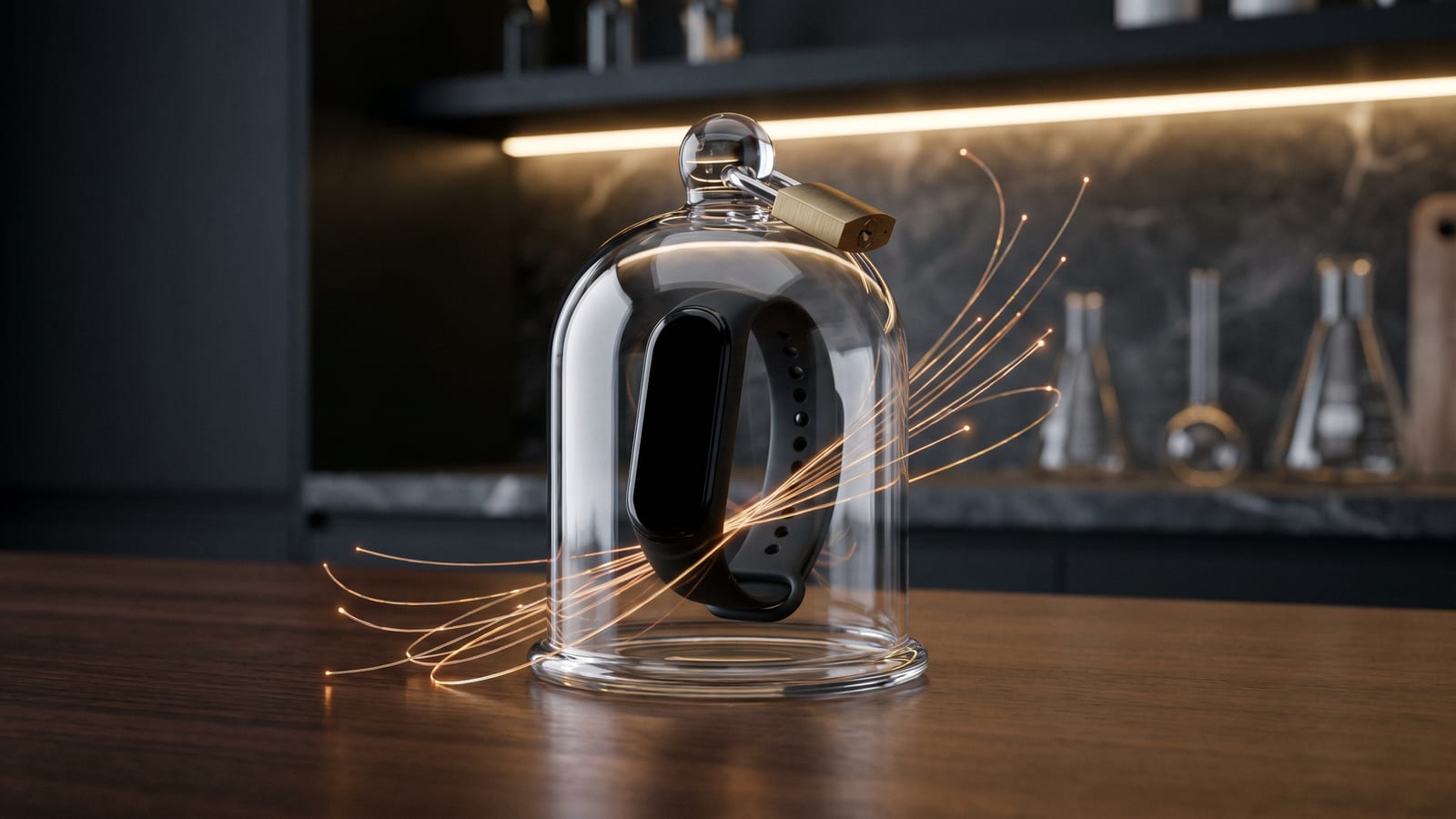
Biohackers are unusually good at optimizing with data. You track your HRV, tweak your sleep protocol, run experiments on yourself that most people would never bother with. But there’s a blind spot: biometric data privacy is almost never part of the calculation, and the stakes are higher than most people realize. Your Oura ring tracks resting heart rate, deep sleep percentage, and whether last night’s late dinner wrecked your recovery score. WHOOP records months of strain and recovery patterns. CGM users get a continuous readout of blood glucose response to every meal. This data is more physiologically intimate than most blood panels your doctor orders. And almost none of it falls under HIPAA protection in the United States.
That gap is real, it’s getting wider, and every biohacker should understand it.
What Is Biometric Data - and Why Should Biohackers Care?
The word “biometric” gets applied to two different things. The classic version is physiological identifiers: fingerprints, facial geometry, iris patterns. These are used to verify identity, and most legal frameworks (where they exist at all) focus here.
Wearables produce something different: continuous behavioral and physiological data over time. Heart rate variability patterns. Sleep architecture across weeks. Skin temperature fluctuations. Gait. These aren’t one-time snapshots. They’re longitudinal records of how your body functions.
The key distinction for biohackers is permanence. If a password database is breached, you change the password. If your HRV signature or sleep architecture is exposed, there’s nothing to reset. It’s you. Forever. That’s what makes wearable biometric data a different category of sensitive information from most things that get stolen in data breaches.
The Biometrics Your Wearables Are Actually Collecting
This isn’t abstract. Here’s what your devices are capturing and why it matters beyond performance optimization:
Heart rate and HRV: Not just a fitness metric. HRV patterns reveal autonomic nervous system state, which correlates with stress levels, emotional arousal, and illness onset. Detailed analysis can distinguish exercise stress from psychological stress.
Sleep stages: Deep sleep percentage, REM duration, sleep efficiency. This is a window into cognitive performance, mental health trends, and neurological function over time.
Blood oxygen (SpO2): Respiratory function, potential sleep apnea indicators. Some conditions are visible here before a clinical diagnosis.
Skin temperature: Oura in particular uses this for illness detection and (for women) cycle tracking. Temperature patterns reveal hormonal states and immune activation.
Activity and movement patterns: Where you go, when you’re active, your daily routine. Combined with timestamps, this is location and lifestyle data.
Blood glucose (CGM users): Extremely sensitive. Glucose response patterns reveal metabolic health, dietary habits, and potentially predisposition to conditions that insurers care about.
None of this is HIPAA-protected unless a licensed healthcare provider ordered the measurement and your data flows through a covered entity. Buying an Oura ring out of your own pocket doesn’t create a healthcare relationship. The data is yours in the sense that you generated it, but what happens to it depends entirely on the company’s privacy policy and applicable state law.
What Do Companies Actually Do With Your Data?
The honest answer: more than most people realize, less than the most paranoid framing suggests.
Research and aggregation. WHOOP and Oura both publish research papers using aggregated user data. This is disclosed in privacy policies, usually opt-in by default for the specific research programs, but aggregate de-identified data use is typically baked in as a baseline. The research is often genuinely valuable. WHOOP’s COVID studies were real contributions. But you’re a research subject whether or not you think of yourself as one.
Third-party partnerships. The defaults matter here. Most companies offer integrations with insurance wellness programs, employer health platforms, and research institutions. Opt-in is the stated model, but how visible that opt-in is during setup varies considerably.
Legal requests. This is where companies differentiate themselves in ways that matter. WHOOP has a published policy of challenging subpoenas and demanding legal process before complying with law enforcement requests. Most companies don’t publish anything comparable. Someone who might face law enforcement attention should research this before picking a device.
Data breaches. Wearable companies have been breached before. Unlike financial data, biometric data can’t be remediated after the fact. A leaked sleep dataset linked to an account is permanently sensitive.
“De-identified” data sales. The technical truth is that many companies sell or share aggregated, anonymized datasets without selling “your” data. The practical concern is re-identification. Research consistently shows that fitness and biometric datasets can be de-anonymized with surprisingly little auxiliary information, particularly for unusual physiological profiles, which describes many biohackers.
The Regulatory Landscape - What Protections Actually Exist?
HIPAA covers healthcare providers, health plans, and clearinghouses. It does not cover consumer wearable companies operating independently. This is the most important gap to understand. The data your cardiologist collects is protected. The same data your Oura ring collects is not, unless Oura has a specific business associate agreement as part of a clinical program.
CCPA/CPRA (California) gives California residents the right to know what data is collected, the right to delete it, and the right to opt out of sale. It covers biometric data. It’s the strongest US consumer privacy protection most people actually have access to, but enforcement is resource-intensive and individual litigation is rare.
GDPR (EU) treats biometric data as a “special category” requiring explicit consent, with strong enforcement mechanisms. European users have meaningfully stronger protections. For EU residents, these rights are real. Companies have paid substantial GDPR fines for mishandling biometric data.
BIPA (Illinois Biometric Information Privacy Act) is the strictest US state law. It requires informed written consent before collecting biometric data, mandates destruction schedules, and critically, allows private right of action: individuals can sue. Over a billion dollars in BIPA settlements have been paid since the law passed. The problem is that BIPA focuses on physiological identifiers (fingerprints, facial scans) more than continuous wearable data.
Federal biometric privacy law: still doesn’t exist. There have been proposals. None have passed. This is a real problem. Your protections depend on which state you live in, and most states have nothing comparable to Illinois or California.
The practical reality is that privacy policies are legally enforceable contracts. Companies can and do get sued for violating them. But individuals rarely litigate, class actions are slow and unpredictable, and regulatory enforcement is inconsistent. Your best protection is reading the policy before you hand over the data, not after.
Real Risks - What Could Actually Go Wrong?
Generic “your data could be stolen” warnings aren’t useful. Here are the actual threat models worth thinking through:
Data breach with non-resettable exposure. Your HRV signature, sleep patterns, and activity data get dumped on a breach forum. Unlike a leaked password, you can’t change any of it. This data remains sensitive indefinitely.
Insurance discrimination. Life insurance and disability insurance companies in the US can legally use lifestyle and health data in underwriting in most states. As wearable data becomes more available and more detailed, the pressure to use it will increase. Health insurance is somewhat protected under the ACA, but life and disability are not.
Employment surveillance. Corporate wellness programs with incentivized wearables exist in scale. In some programs, employer-sponsored plans have access to aggregate health data. The line between “wellness incentive” and “health surveillance” is blurry, and employees often don’t read the data flow carefully during benefits enrollment.
Law enforcement access. Fitness tracker data has appeared in criminal investigations. Companies vary widely in how aggressively they protect user data from legal requests, and most don’t publish clear policies. If this threat model is relevant to you, research it.
Lifestyle and location inference. Biometric patterns plus activity data is a detailed map of where you are, when you sleep, when you work, and who you socialize with. It’s not purely physiological: it’s behavioral.
How to Protect Yourself - Practical Steps
Read the privacy policy before buying. Specifically look for: what third parties receive your data, whether research use is opt-in or opt-out, how long data is retained, and whether you can actually delete it. Five minutes of skimming before purchase is more valuable than anything you can do after.
Use privacy settings aggressively. Opt out of research programs, third-party integrations, and data sharing that isn’t core to the product. On Oura, this means reviewing integrations and data sharing settings. On WHOOP, check team sharing and third-party connections. Apple Health has granular per-app data sharing controls. Use them.
Understand the device architecture. Apple’s approach is genuinely different from most competitors. Face ID biometric data never leaves the Secure Enclave on your device. Health data sync to iCloud is end-to-end encrypted. This is a meaningful privacy architecture choice. Cloud-first approaches from other vendors mean your data lives on their servers, not just your phone.
Use deletion tools when you stop using a device. Under CCPA or GDPR (whichever applies to you), you have the right to request data deletion. Exercise it. When you move on from a WHOOP or any other service, submit the deletion request before you cancel. Most companies provide this in account settings.
Export your data periodically. Both CCPA and GDPR give you the right to a copy of your data. Do this every year or so. Knowing what’s stored and having your own copy is both useful and a reality check on what you’ve actually shared.
Calibrate to your actual threat model. A journalist, activist, or public figure has different risks than someone who just wants to optimize their sleep. For most biohackers, the realistic near-term risks are insurance discrimination and breach exposure, not law enforcement. Protect accordingly, not maximally.
Frequently Asked Questions
Is my Oura ring data HIPAA protected? No. HIPAA covers healthcare providers, health plans, and their business associates. Unless your doctor ordered the Oura ring as part of a clinical program with a formal data sharing agreement, the data flows through Oura’s consumer privacy policy, not HIPAA.
Can my employer force me to wear a fitness tracker? Generally yes in the US, particularly through incentive-based wellness programs. Mandatory tracking programs have faced legal challenges, but incentivized participation is broadly legal. State rules vary, and California has stronger employee privacy protections. Read what your employer’s wellness program actually does with the data.
Can insurance companies use my wearable data? Health insurance under the ACA has some constraints around how health data can be used in underwriting. Life insurance and disability insurance do not have equivalent federal restrictions. Voluntary data sharing programs exist, and the direction is toward more use, not less.
What happens to my data if a wearable company goes bankrupt? Data is a company asset. In bankruptcy, it can be sold. Fitbit was acquired by Google; data policies changed. Some bankruptcy proceedings have included data deletion requirements, but this is the exception, not the default. There’s no federal protection guaranteeing deletion on acquisition.
Are phone fingerprint scanners secure? For most threat models, yes. Your fingerprint template is stored as a mathematical representation (not an image) in a secure enclave on your device. The realistic risk is a breach of that template, not someone spoofing the scanner. For typical use, fingerprint authentication is secure.
Should I use Face ID or a passcode? Use both. Face ID is secure for most threat models, but it’s different from a passcode. Law enforcement can legally compel biometric unlock in some jurisdictions; a passcode has stronger Fifth Amendment protection in US courts. The right answer is Face ID for convenience plus a strong passcode as backup, knowing each has a different vulnerability profile.