Cold Water Immersion - Benefits, Risks, and How to Start
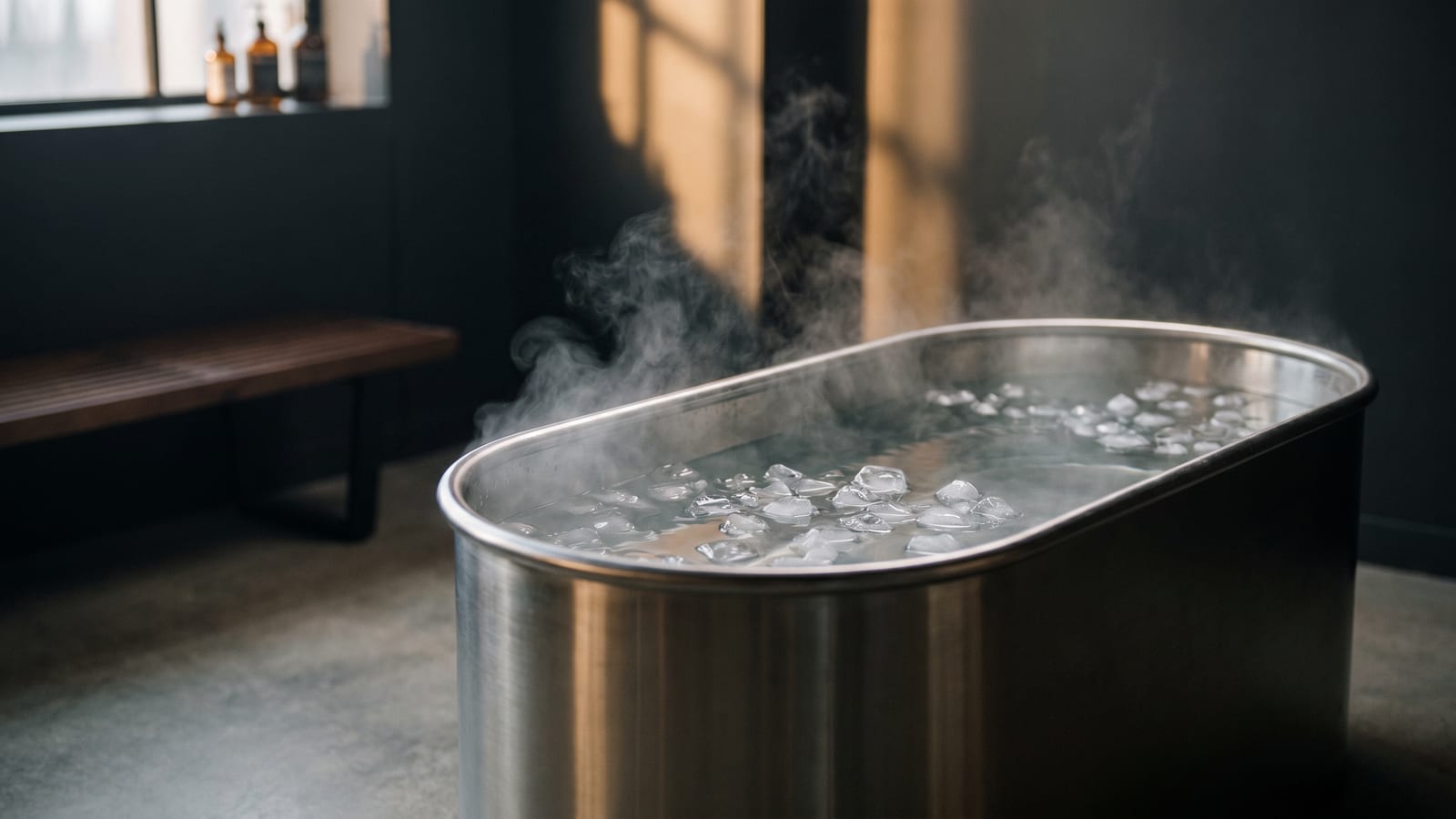
You step into 12°C water. Your brain screams. Your body gasps. And somewhere in that chaos, something useful is happening.
Cold water immersion has moved from elite athletes to a legitimate subject of neuroscience and mental health research. The evidence is uneven in places, strong in others, and worth understanding before you commit to a morning ice bath. This article walks through what the science actually supports, what remains speculative, and how to start safely if you decide it is worth trying.
What Is Cold Water Immersion?
Cold water immersion (CWI) means submerging part or all of your body in water cold enough to trigger a physiological stress response. The range most research focuses on: roughly 10 to 15°C (50 to 60°F). At that temperature, the body reacts quickly and measurably.
It started as an athletic recovery tool. Sports medicine teams used ice baths to reduce post-training soreness, and the practice spread to recreational gym-goers. From there, wellness culture picked it up and reframed it as a general health intervention. That reframing is not wrong, but it muddied the evidence base.
Four main forms exist:
- Ice baths: the classic tub filled with cold water and ice cubes, typically 8 to 15°C
- Cold showers: the lowest-barrier entry point; accessible to almost everyone
- Open water swimming: lakes, rivers, ocean; temperature varies by season and location
- Cryotherapy: worth mentioning because people confuse it with cold water therapy. It’s not water-based at all. Cryotherapy uses very cold air (around -110°C) for 2 to 3 minutes. The physiological effects overlap in some ways, but it’s a different stimulus entirely.
The Cold Shock Response
The first 30 to 60 seconds in cold water are the most intense. Your skin’s cold receptors fire all at once, flooding your brain with sensory input. The result: a gasp reflex, rapid breathing, and a spike in heart rate.
For healthy people, this is normal and not dangerous. It is your sympathetic nervous system doing exactly what it is supposed to do. The heart rate spike and hyperventilation are startling, but they stabilize within a minute or two.
Control your breathing immediately on entry: exhale before full contact, keep your exhales long and deliberate. This prevents you from amplifying the cold shock response into full hyperventilation.
Mental Health Benefits
This is where the evidence gets genuinely interesting.
A study involving 20 minutes of sea water immersion at 13.6°C found significant improvements across mood measures: decreased tension, anger, depression, and fatigue, alongside increased vigor and self-esteem. Participants noticed them. The cold plunge benefits for mood appear consistently across studies, even if the mechanistic explanation is still being worked out.
Cortisol behavior during CWI is counterintuitive. You’d expect a stressor to spike cortisol. It does not, reliably. Cortisol does not increase during cold water immersion, and in several studies it decreases afterward, remaining lower for up to 3 hours post-session. That post-immersion cortisol suppression maps well onto the “calm but alert” feeling people report after a cold plunge.
Cold exposure reliably triggers norepinephrine release, often in substantial amounts (some studies show 2 to 3x increases). Norepinephrine is involved in focus, attention, and mood regulation. Endorphins also rise. The combination produces a real neurochemical state change, not a placebo effect.
What about anxiety and depression specifically? The ice bath mental health research is promising but honest disclosure matters here: it’s early. Nikolai Shevchuk’s 2008 hypothesis paper proposed adapted cold shower therapy as a treatment for depression based on the dense cold receptor distribution in the skin and the resulting brain stimulation. The hypothesis is plausible and well-reasoned. But a hypothesis paper is not a clinical trial. If you are managing a mood disorder, CWI might be a useful complement to treatment. It should not replace it.
The Vagus Nerve and Autonomic Resilience
Cold water therapy and vagus nerve function interact in a way worth understanding, because the direction of effect depends on what you immerse.
Full-body immersion triggers sympathetic activation, the stress branch of your autonomic nervous system. Heart rate and blood pressure go up. Alertness increases. This is why a morning cold plunge makes you feel awake and focused.
Facial immersion triggers the opposite: the diving reflex, a parasympathetic response. Heart rate drops. The body conserves oxygen. You get calm, not stimulation.
The practical implication: if you want alertness and energy, go full-body. If you want to calm a stress response or practice recovery, splash cold water on your face or submerge just your head. Both have uses; they are just different tools.
On the stress resilience side, repeated cold exposure appears to train the cortisol response. People who practice regular cold water immersion show reduced cortisol responses to unrelated everyday stressors. That adaptation has potential relevance for PTSD and chronic stress, though the research is still preliminary in clinical populations.
Physical Recovery: What the Science Actually Says
Direct answer: CWI does not enhance muscle repair or strength gains. If you are in a hypertrophy phase, regular post-training ice baths may actually blunt adaptation by suppressing the inflammatory response your muscles need to grow.
What CWI does reliably is reduce perceived muscle soreness. You feel less sore. The soreness is a sensation, and cold numbs and dampens it. That is useful, especially for athletes competing on back-to-back days who need to perform regardless of how their legs feel. But it is not the same as actually recovering faster.
Inflammation marker data is mixed. Short-term changes in markers like CRP and IL-6 show up in studies, but long-term clinical relevance is unclear. Inflammation after training is largely normal and adaptive. Reducing it indiscriminately is not obviously beneficial.
Use CWI for how it makes you feel, not for athletic performance gains. If it helps you sleep or improves your mood, those are real benefits. Do not use it as a substitute for sleep, nutrition, and actual recovery time.
Brain Health and Cold-Shock Proteins
Cold shock proteins, particularly RBM3, have attracted attention in neurodegenerative disease research. In mouse models, cold exposure triggers RBM3 production, which appears to protect synapses and slow neurodegeneration. The effect in mice is real and reproducible.
The leap to humans is still preliminary. RBM3 increases have been observed in humans exposed to cold, but whether that translates to meaningful protection against Alzheimer’s or Parkinson’s is not established. Researchers at Cambridge and other institutions are working on this, and the early results are enough to make this a genuine research direction worth watching. It is not a recommendation to start cold plunging as a dementia prevention protocol.
How to Get Started
Cold water immersion is safe for beginners if you build up gradually. The biggest risks come from jumping in too deep too fast, literally and figuratively.
Weeks 1 to 2: Cold showers. Finish your regular shower with 30 to 60 seconds of cold water. Work toward 2 minutes. Practice the breathing: exhale before the cold hits, keep breath steady.
Weeks 3 to 4: Add facial immersion. Fill a basin with cold water and submerge your face for 15 to 30 seconds. Or pour cold water over your head after your shower. This activates the diving reflex and separates the parasympathetic calming effect from the full-body sympathetic spike.
Month 2 onwards: Ice bath or cold plunge. Target 10 to 15°C for 2 to 5 minutes. Do not push past 10 minutes at that temperature. The marginal benefit drops and the risk of overcooling rises.
To hit roughly 12 to 13°C in a standard bathtub (around 200 liters), add 1 to 2 kg of ice to cool water. Measure with a thermometer until you develop a feel for it. Cold showers never get you as cold as a tub, and surface area matters for the full response.
Open water: Below 15°C outdoors, always bring a safety buddy. Never swim alone in cold open water. The cold shock response combined with distance from shore is where drownings happen.
Frequency: 3 to 5 times per week appears sufficient for mental health benefits. Daily is fine once adapted. Morning sessions support alertness. Post-training sessions (30 to 60 minutes after training) can help with perceived recovery.
Risks and Who Should Avoid It
Cold water therapy carries real risks for specific populations.
Heart conditions. If you have arrhythmia, coronary artery disease, or uncontrolled hypertension, avoid CWI. The cardiovascular stress response during immersion is significant. Consult your cardiologist before starting.
Respiratory conditions. Asthma and COPD can be triggered or worsened by the cold shock response and cold air inhalation. Risk is higher in open water environments.
Cold hypersensitivity. Raynaud’s disease, cold urticaria, and other circulatory conditions are contraindications. If you have had unusual reactions to cold in the past, get evaluated before starting a protocol.
Open water: never alone. Cold water incapacitation can happen faster than you expect. Even strong swimmers have drowned in cold open water within meters of shore. Always have someone with you who knows you are in the water.
Frostbite risk is real at very low temperatures with prolonged exposure. At 10 to 15°C for short sessions, you are not in frostbite territory, but ice-cold water closer to 0°C with extended exposure changes the math significantly.
Frequently Asked Questions
Can I do this if I’m not an athlete? Yes. Most of the mental health and autonomic benefits studied in CWI research apply to non-athletes. Cold water affects your mood, cortisol, and norepinephrine regardless of training context.
Will CWI boost my immune system? The evidence is limited. Some studies show changes in white blood cell counts after cold exposure, but the clinical significance is unclear. Do not start a cold plunge protocol primarily for immune benefits; the evidence does not support that framing yet.
Is it better in the morning or evening? Morning for alertness and mood lift. Evening works for perceived recovery after training, but avoid very late sessions if you are sensitive to stimulation before sleep; the norepinephrine spike can delay sleep onset in some people.
Can I use ice cubes in a bathtub? Yes. Roughly 1 to 2 kg of ice per 200 liters of cool water gets you into the target range. Use a thermometer until you calibrate what that volume looks and feels like.
How long before I notice mental health benefits? Many people notice a mood shift after the first session. Sustained, reliable benefits tend to build over 4 or more weeks of consistent practice. The acute effect is real and immediate. The adaptations that carry over day-to-day take time.
Does cold water immersion help with anxiety? The cortisol suppression and norepinephrine effects are relevant to anxiety, and anecdotal reports are widespread. Controlled trials specifically targeting anxiety are limited. Worth trying if you are otherwise healthy; do not rely on it as your sole anxiety management strategy.